

Garden gnomes have stood watch over European gardens since 16th-century Germany, where landowners believed these clay sentinels protected plants from mischievous spirits and nighttime pests. Today, these bearded guardians serve purposes far beyond folklore, transforming ordinary gardens into personality-filled spaces that spark conversation and childhood wonder.
The original gnomes weren’t mere decoration. Germanic miners crafted them as tributes to earth-dwelling creatures called “gnomi,” mythical beings who supposedly guarded underground treasures and helped plants flourish. Wealthy gardeners positioned these figures near vulnerable seedlings and prized vegetables, trusting them to ward off rodents and bring good fortune to harvests. This practical-mystical blend created a gardening tradition that persists 400 years later.
Modern garden gnomes fulfill multiple roles in your outdoor space. They create focal points that draw the eye through garden beds, mark specific areas like herb gardens or children’s play zones, and inject humor into otherwise serious landscape designs. Many gardeners report that gnomes help them emotionally connect with their gardens, turning daily watering routines into opportunities to check on their “garden helpers.” Children especially benefit from these whimsical additions, as gnomes transform gardens into magical realms that encourage outdoor exploration and plant appreciation.
Whether you’re embracing centuries-old tradition or simply adding character to your landscaping, understanding gnome placement, scale, and thematic consistency helps maximize their impact. The right gnome in the right spot becomes more than decoration—it becomes part of your garden’s story.
The Original Purpose Behind Garden Gnomes
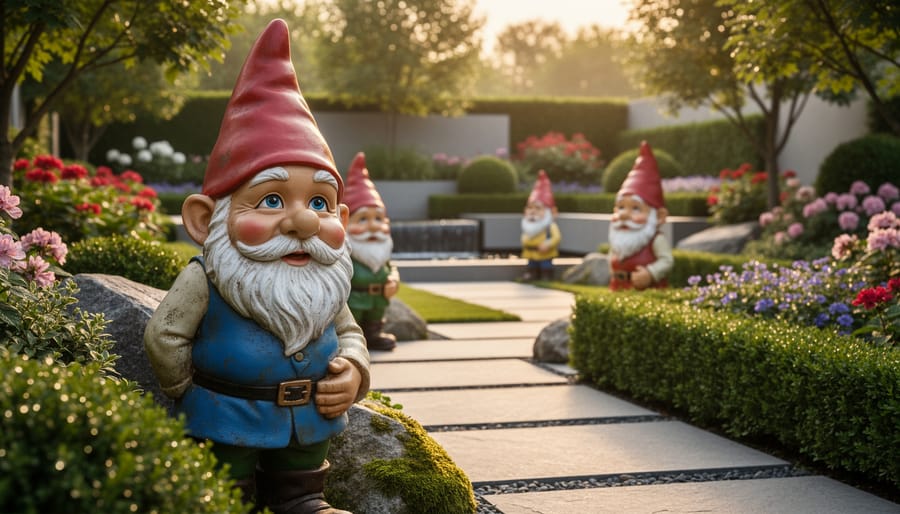
From German Folklore to Your Front Yard
Garden gnomes didn’t just appear magically in our yards overnight. These cheerful little figures have quite the travel story! Their journey begins in 19th-century Germany, specifically in the town of Gräfenroda in Thuringia, where a clever craftsman named Philipp Griebel started sculpting terracotta gnomes around 1872. These weren’t just random decorations—they were inspired by local mining folklore about small, earth-dwelling spirits believed to protect underground treasures and bring good fortune to those who respected the land.
I remember when I first learned this history during a garden club meeting, and it completely changed how I viewed the gnome in my grandmother’s garden. It wasn’t just kitsch—it was carrying on centuries of garden folklore traditions!
The gnomes quickly became popular across Germany as symbols of good luck and guardians of gardens. By the late 1800s, they’d hopped across the English Channel when Sir Charles Isham brought 21 terracotta gnomes from Germany to his estate in Northamptonshire. From there, the trend spread like wildflowers across Europe and eventually sailed to America in the early 20th century.
Modern manufacturing transformed these handcrafted treasures into affordable garden companions for everyone. While purists still seek out hand-painted ceramic versions from Germany, plastic and resin gnomes have made these guardians accessible to gardeners everywhere, continuing a tradition that connects us to both history and our gardening community.
What Gnomes Were Meant to Protect
Long before garden gnomes became the cheerful lawn ornaments we know today, folklore painted them as serious protectors of the earth’s bounty. In European tradition, particularly in Germanic and Scandinavian cultures, gnomes were believed to be nature spirits who lived underground and emerged at night to tend to gardens and guard treasures hidden beneath the soil.
These mystical little beings were thought to protect your plants from harm, ensuring healthy growth and bountiful harvests. Farmers and gardeners genuinely believed that keeping gnomes happy meant prosperity for their crops. If your vegetables thrived and your flowers bloomed spectacularly, the garden gnomes deserved the credit. Conversely, if crops failed, it might mean you’d somehow offended these temperamental guardians.
The gnomes’ protective duties extended beyond just warding off pests and disease. They were said to guard against evil spirits, bad weather, and anyone with ill intentions toward your garden. Some folklore even suggested they’d emerge after dark to actually do the weeding and watering for you, which honestly sounds like the kind of help we could all use today!
I’ve always found it charming that our gardening ancestors attributed their successes and failures to these little helpers. While we now understand plant science better, there’s something wonderfully whimsical about honoring that tradition. Many gardeners today still place gnomes in their gardens as a nod to this protective legacy, even if we’re now the ones doing the actual weeding.
Modern Purposes Garden Gnomes Serve Today
Creating Visual Interest and Personality
Garden gnomes are the ultimate personality boosters for your outdoor space! I remember visiting a neighbor’s garden years ago and being completely charmed by a whimsical gnome peeking out from behind her hostas. It instantly made me smile and sparked a delightful conversation about her collecting hobby.
These cheerful figures serve as wonderful expressions of your personal style and gardening philosophy. Whether you choose a traditional red-capped gnome or opt for something more modern and quirky, each piece tells visitors something about who you are as a gardener. They’re natural conversation starters that help break the ice with fellow garden enthusiasts in your community.
Beyond following standard garden design principles, gnomes let you inject playfulness and creativity into your landscape. You might position them as surprise discoveries along pathways, create themed vignettes, or use them to highlight special plantings. Some gardeners I know have even started trading gnomes with friends, building connections through shared whimsy.
The beauty of garden gnomes is their versatility in reflecting your unique sense of humor and style, transforming ordinary garden beds into spaces that genuinely feel like yours.
Marking Garden Zones and Pathways
Beyond their charming appearance, garden gnomes can serve wonderfully practical purposes in organizing your outdoor space. I discovered this accidentally when a friend visiting my garden remarked how easily she navigated between my herb section and vegetable beds, thanks to the gnomes I’d positioned as cheerful markers.
Think of gnomes as your garden’s navigation system! Place a red-hatted gnome at the entrance to your rose garden, or position a gnome with a wheelbarrow where your compost path begins. This works especially well in larger gardens where visitors might feel overwhelmed or lose their bearings among winding pathways.
For vegetable gardens, gnomes excel at marking different growing zones. I’ve seen clever gardeners use them to identify tomato sections versus leafy greens, making crop rotation planning much simpler next season. They’re particularly helpful when you’re experimenting with companion planting arrangements and need visual reminders of what’s planted where.
If you host garden tours or enjoy sharing your space with fellow gardening enthusiasts, strategically placed gnomes create natural stopping points along the path. They encourage guests to pause and appreciate specific plantings while keeping foot traffic flowing in the right direction. Plus, children absolutely love following the gnome trail, making family garden visits more engaging for everyone.
Bringing Joy and Nostalgia to Your Space
There’s something wonderfully whimsical about stepping into a garden and being greeted by a cheerful gnome peeking out from behind the hostas. I’ll never forget visiting my grandmother’s garden as a child, where a slightly weathered gnome with a fishing rod sat by her small pond. That little figure made the whole space feel magical, like I’d stepped into a storybook.
Garden gnomes tap into something deeper than mere decoration. They reconnect us with simpler times and childhood wonder, transforming ordinary outdoor spaces into places of joy and imagination. When you spot that bright red cap among your flower beds, it’s hard not to smile.
Research shows that playful elements in gardens genuinely boost our mood and reduce stress. These cheerful characters create conversation starters when friends visit and give grandchildren something enchanting to discover during garden tours. Many gardeners in our community have shared how their gnomes became beloved fixtures, almost like outdoor family members.
The beauty of garden gnomes is their ability to keep gardening fun and lighthearted. On tough days when the weeds seem endless or pests have struck again, that quirky little figure reminds you not to take it all too seriously. Your garden should bring happiness, and sometimes a whimsical gnome is exactly the prescription needed for creating that joyful atmosphere we all crave in our outdoor sanctuaries.
Strategic Placement: Where Your Gnomes Will Thrive
Under Trees and Near Shrubs
Shaded spots beneath trees and tucked beside shrubs create perfect homes for garden gnomes, and I’ve learned this lesson after placing my first gnome in full sun only to watch its colors fade within a season! These naturally sheltered areas not only protect your gnomes from harsh weather and direct sunlight, but they also help recreate the woodland settings where these charming characters supposedly originated in folklore.
When you nestle a gnome under a tree canopy or next to dense shrubs, you’re building an enchanting micro-scene that feels organic rather than staged. The dappled light filtering through leaves adds mystery and charm, making it seem like your gnome truly belongs there. I love positioning mine near hostas or ferns to enhance that forest-floor feeling.
Beyond aesthetics, there’s a practical advantage here. Shaded placement significantly extends your gnome’s lifespan by protecting the paint and materials from UV damage and temperature extremes. Rain and snow won’t batter them as heavily either. One gardening friend shared how her shaded gnomes have remained vibrant for over a decade, while her sunny-spot gnomes needed repainting every few years. Consider this when planning your gnome village.
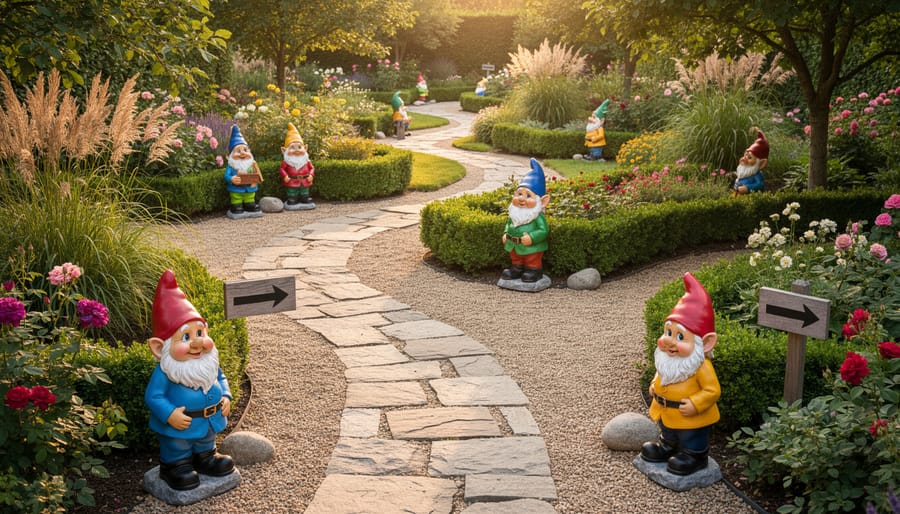
Along Garden Paths and Borders
Garden gnomes make wonderful guides along garden pathways and borders, creating visual interest while helping define different areas of your outdoor space. I love using them as natural wayfinders that draw visitors deeper into the garden, almost like friendly sentinels saying, “This way to something special!”
For the most natural-looking arrangements, space your gnomes irregularly rather than in perfect lines. Try placing one every 6 to 10 feet along a path, varying the distance slightly to avoid that too-organized look. I learned this trick from a fellow gardener at our community plant swap, and it really does make a difference.
Grouping works beautifully too. Cluster three gnomes of different sizes together at pathway intersections or garden entrances, positioning them at varying angles as if they’re engaged in conversation. This creates focal points that feel spontaneous rather than staged.
Consider placing gnomes where paths curve or bend, using them to visually guide visitors around corners. Tuck some partially behind larger plants so they peek out playfully, rewarding observant visitors with delightful discoveries. This layered approach adds depth and encourages people to explore every corner of your garden.
Near Water Features and Ponds
There’s something absolutely enchanting about positioning garden gnomes near water features and ponds! I’ve found that these cheerful little companions truly come alive in waterside settings, creating delightful vignettes that never fail to bring a smile to visitors’ faces.
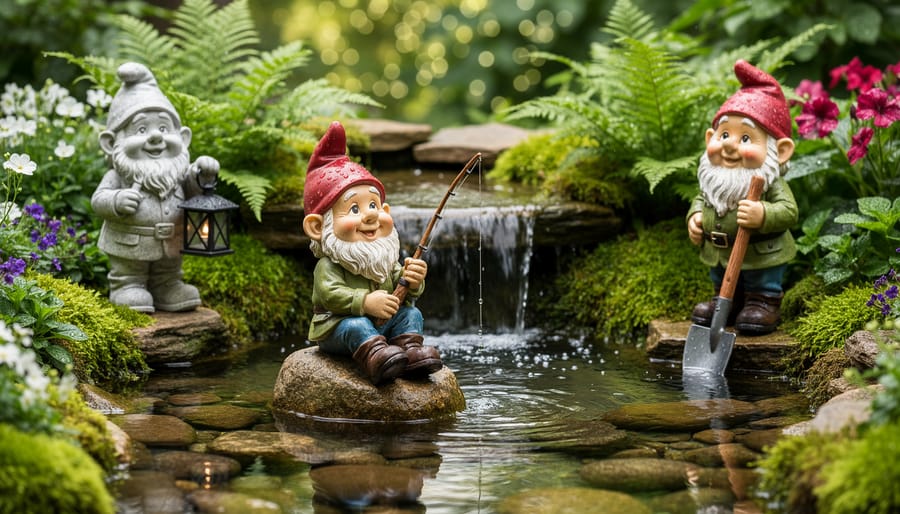
One of my favorite setups features a fishing gnome perched on a flat rock beside my small pond, complete with a tiny fishing rod. My neighbor went a step further, arranging three gnomes around her fountain as if they’re having a lakeside picnic. These scenes add personality and whimsy while drawing the eye toward your water elements, creating natural focal points in your garden design.
When placing gnomes near water, weatherproofing becomes essential. Even resin gnomes benefit from a clear sealant spray applied annually, especially in constantly damp environments. I learned this the hard way when my first waterside gnome developed moss faster than I expected! Position them on stable surfaces like rocks or stepping stones rather than directly in wet soil to prevent tilting and extend their lifespan.
For ponds, consider gnomes sitting on the edge with their feet dangling toward the water, or place them among marginal plants like irises and cattails. The combination of stationary gnomes and flowing water creates a peaceful, storybook atmosphere that transforms ordinary garden ponds into magical retreats.
Among Flower Beds and Vegetable Gardens
Placing your garden gnome among flower beds and vegetable gardens connects directly to their original purpose as plant guardians. I’ve found that positioning gnomes near the plants they’re “protecting” creates delightful focal points while honoring tradition. The trick is finding spots where these little helpers won’t interfere with your gardening routine.
Tuck gnomes between established perennials or at row ends in vegetable patches where you won’t accidentally knock them over while weeding. Avoid placing them where you’ll need frequent access for harvesting or deadheading. A gnome stationed near your prized tomatoes or roses makes a charming sentry, but ensure there’s still plenty of room to maneuver your tools and watering can.
Consider plant height too. Shorter gnomes work beautifully in low-growing herb gardens or strawberry patches, while taller figures can stand proudly behind mid-sized plants without being completely hidden. One fellow gardener in our community shared how she positions her gnomes on flat stones, which keeps them stable and prevents soil compaction around plant roots. This simple trick also makes seasonal garden cleanup much easier when you need to move them temporarily.
Practical Tips for Garden Gnome Success
Choosing Weather-Resistant Materials
I’ve learned from experience that nothing dampens garden spirits quite like watching a beloved gnome crumble after one harsh winter! Choosing the right weather-resistant materials makes all the difference in keeping your little guardians standing proud through every season.
Resin gnomes are my go-to recommendation for most climates. They’re lightweight, affordable, and handle temperature swings beautifully without cracking. The downside? Cheaper versions can fade in intense sunlight, so look for UV-resistant options if you’re in sun-drenched regions.
Ceramic gnomes bring that classic, hand-painted charm we all adore, but they’re best suited for covered areas or mild climates. Frost can cause cracking, and I’ve seen too many cherished pieces meet unfortunate ends during unexpected cold snaps.
Concrete gnomes are the heavyweights of durability, literally weathering storms like champions. They’re perfect for windy areas and extreme climates, though their weight makes repositioning a workout! They also develop lovely moss and patina over time, adding character.
For coastal gardeners in our community, metal and wood gnomes need extra protection against salt air and moisture, while stone varieties offer timeless elegance with minimal maintenance needs.
Avoiding Overcrowding and Kitsch
I’ll be honest with you—I once got a bit carried away with my gnome collection. What started as three charming fellows guarding my herb spiral turned into twelve gnomes scattered throughout my modest backyard, and let me tell you, it crossed from whimsical into what my neighbor diplomatically called “gnome city.” I learned my lesson about balance the hard way!
The key to avoiding that overly kitschy look is thinking of gnomes as focal points rather than filling every available space. For smaller gardens under 500 square feet, I recommend limiting yourself to one or two well-placed gnomes. They’ll create delightful surprise moments without overwhelming your plantings. Medium-sized gardens between 500-1,500 square feet can comfortably accommodate three to five gnomes, while larger properties have more flexibility—though even then, restraint is your friend.
Scale matters enormously. A single impressive gnome at twelve inches tall makes a stronger statement than a crowd of tiny three-inch figures that can look cluttered and get lost among your plants. Consider your garden’s style too. A cottage garden naturally accommodates more whimsy than a minimalist Japanese-inspired space.
Here’s a trick I learned from our community: try temporary placement first. Set your gnomes out and live with the arrangement for a week before making it permanent. Take photos from different angles—sometimes what looks charming up close reads as chaotic from your kitchen window.
Remember, gnomes should enhance your garden’s personality, not define it. Your beautiful plants and thoughtful design should always remain the stars of the show, with gnomes adding those delightful punctuation marks of personality.
From their humble beginnings as protectors of European gardens to today’s whimsical landscape companions, garden gnomes have certainly earned their place in our outdoor spaces. Whether you’ve chosen a traditional bearded fellow to guard your vegetable patch or positioned a cheerful gnome to mark your garden path, you’re participating in a delightful tradition that spans centuries.
The beauty of garden gnomes is that there’s no single right way to enjoy them. They can serve as focal points that draw the eye, practical markers that guide visitors, conversation starters that bring neighbors together, or simply sources of daily joy when you spot them peeking out from behind your hostas. I’ve found that the gnomes I placed years ago have become cherished parts of my garden’s personality, and I smile every time I see them.
Now it’s your turn to share! We’d love to see how you’ve incorporated gnomes into your garden design. Have you created an entire gnome village? Does your gnome stand guard over a specific plant? Share your photos and stories in the comments below. Let’s celebrate these charming garden companions together and inspire each other with creative placement ideas!