
Starting a garden transformation before your baby arrives gives you crucial time to identify and remove hazards while your mobility is still unrestricted. Begin by walking your garden with fresh eyes, photographing erery plant, water feature, and structure at ground level where your crawling baby will experience it. Download a plant identification app immediately and cross-reference every specimen against poison control databases, prioritizing the removal of common culprits like foxgloves, lily of the valley, and oleander that can cause serious harm from even tiny ingested amounts.
Create clearly defined zones using low hedging or natural borders that will eventually help your toddler understand boundaries without harsh fencing that blocks your view. Replace sharp-edged gravel paths with soft rubber mulch or closely-mown grass corridors that cushion inevitable tumbles while remaining visually appealing. Install raised beds at adult height for your prized plants and potentially harmful herbs, keeping toxic varieties like rhubarb leaves completely out of reach while making garden maintenance comfortable during pregnancy and beyond.
When my neighbor’s daughter ate decorative berries at eighteen months, their frantic hospital dash taught our entire gardening community an unforgettable lesson about vigilance. Parents consistently underestimate how quickly babies transition from stationary to mobile explorers, making advance preparation essential rather than optional. Your baby-friendly garden should nurture curiosity through sensory-rich plantings like lamb’s ear and snapdragons while eliminating risks, creating an outdoor sanctuary where supervision means enjoyment rather than constant intervention.
Understanding What Makes a Garden Baby-Friendly
When I first discovered I was expecting, I looked at my beloved garden with completely new eyes. That stunning foxglove border? Suddenly terrifying. The decorative pond I’d spent months perfecting? A worry waiting to happen. Creating a baby-friendly garden isn’t about sacrificing beauty or abandoning your passion for plants—it’s about thoughtful adaptation that serves your little one’s development while keeping them safe.
At its heart, baby-friendly garden design rests on three fundamental pillars. First comes safety, which extends beyond simply removing toxic plants. You’ll need to consider physical hazards like sharp edges, water features, and unstable structures that curious hands might grab. Second is sensory stimulation—babies learn about their world through touch, smell, sight, and even taste, so your garden becomes an outdoor classroom filled with soft lamb’s ear leaves, fragrant herbs, and rustling grasses. Third, and perhaps most rewarding, is supporting developmental milestones through appropriate spaces for tummy time, crawling, and eventually those wobbly first steps.
The beauty of designing garden spaces with babies in mind is that many principles overlap with creating wildlife-friendly, sustainable gardens. Native plants tend to be non-toxic and low-maintenance. Organic gardening methods eliminate chemical worries. Diverse textures and colors that attract pollinators also captivate tiny observers.
I’ve found the secret is starting with zones. Designate specific areas where baby can safely explore under supervision, then gradually expand these spaces as they grow. This approach lets you maintain your gardening hobby while ensuring every outdoor adventure remains both stimulating and secure.
The Poison Problem: Identifying and Removing Toxic Plants

Common Culprits You Probably Already Have
I’ll be honest—when I first learned I was expecting, I walked around my garden with fresh eyes and had a bit of a shock. Some of my most beloved plants turned out to be surprisingly dangerous for little ones who might decide everything needs a taste test!
Let’s start with the showstoppers. Foxgloves are absolutely stunning with their tall spires of tubular flowers, but every part of this plant contains toxic compounds that affect the heart. Even small amounts can cause serious problems. Similarly, those cheerful daffodils that signal spring’s arrival? Their bulbs are particularly toxic and can cause severe vomiting and abdominal pain if ingested.
Azaleas and rhododendrons are another common feature in many established gardens, and I know several families in our community who’ve had to make the tough decision to remove these beauties. All parts of these plants contain grayanotoxins, which can cause drooling, vomiting, and in severe cases, affect the heart and central nervous system.
Other usual suspects include lilies of the valley (those delicate bell-shaped flowers hide serious toxins), oleander (beautiful but extremely poisonous), and yew bushes (the red berries are tempting but the seeds inside are dangerous).
The good news? Recognizing these plants is the first step toward creating a safer space. In the next section, we’ll explore some wonderful alternatives that’ll keep your garden gorgeous and your little explorer safe.
Safe Alternatives That Look Just as Beautiful
The good news is you don’t have to sacrifice beauty for safety! I learned this firsthand when I was transforming my garden before my daughter arrived. I was heartbroken about removing my gorgeous foxgloves until a fellow gardener at our community meetup showed me snapdragons. They have that same tall, dramatic presence with tubular flowers, but they’re completely safe for curious little hands.
For those of you mourning the loss of colorful oleander, consider hibiscus instead. These show-stoppers produce equally stunning blooms in vibrant reds, pinks, and yellows, and they’re perfectly safe around babies. Plus, they’re surprisingly easy to grow, even for those of us who sometimes forget to water!
If you’re removing daffodils and tulips from your spring lineup, swap them for cheerful marigolds or zinnias. They bloom prolifically throughout the growing season, giving you more color for longer. I planted a whole border of zinnias last year, and my toddler loved picking bouquets without me having to worry.
Hostas make excellent ground cover replacements for toxic ivy varieties. They offer beautiful foliage variation and thrive in shade, perfect for those tricky spots under trees. Another community favorite is lamb’s ear, which provides that same silvery texture as dusty miller but is safe if nibbled.
Remember, creating a baby-friendly garden means you can actually relax and enjoy watching your little one explore nature’s wonders alongside you.
Creating Safe Surfaces and Play Zones
The Best Ground Covers for Crawling Babies
When your little one starts exploring on all fours, the surface they’re crawling on becomes incredibly important! I learned this the hard way when my nephew discovered a patch of prickly grass that left his knees red and irritated during a family gathering.
For the softest underfoot experience, consider fine fescue grass varieties. These create a luxurious, gentle surface that’s perfect for tender baby skin. They’re also more shade-tolerant than many alternatives, making them ideal for areas under trees where babies often play. Maintaining your lawn with regular mowing at a higher setting keeps it cushiony and inviting.
Clover lawns are gaining popularity in our gardening community, and for good reason! White Dutch clover stays naturally short, feels wonderfully soft, and fixes nitrogen in the soil. Plus, it’s nearly maintenance-free and stays green without constant watering. Many parents love that it creates a resilient, forgiving surface that bounces back quickly after playtime.
For play areas, consider certified playground mulch made from shredded rubber or engineered wood fiber. These materials cushion falls while staying splinter-free. Avoid cocoa mulch entirely, as it’s toxic to both babies and pets if ingested, and skip cedar or pine mulches which can cause splinters.
Whatever you choose, test it yourself by spending a few minutes crawling around. If it’s comfortable for you, it’ll work beautifully for your baby’s adventures!

Setting Up Your First Baby Play Area
Creating your first baby play area is such an exciting milestone! Start by choosing a flat, well-drained spot visible from your main sitting area—I’ll never forget setting up my daughter’s space where I could watch her from the kitchen window while preparing meals.
Begin by establishing clear boundaries using low edging, decorative fencing, or even raised borders with child-safe plants. These visual markers help contain toys and define the space as baby grows into a toddler. Make boundaries at least six feet in diameter to allow room for movement and exploration.
Next, address the surface. Remove any existing lawn and lay a weed-suppressing membrane, then top with soft-fall materials. Rubber mulch or play-grade bark (minimum four inches deep) provides excellent cushioning for inevitable tumbles. Alternatively, consider artificial grass designed for play areas—it’s low-maintenance and stays clean in all weather.
Position any garden furniture like a small bench outside the play zone where you can sit comfortably while supervising. Inside the area, add a waterproof storage box for toys and a small shade sail or umbrella for sun protection.
Finally, install a gentle border of sensory-friendly plants just outside the boundary—lavender, lamb’s ear, or soft grasses that baby can safely touch under supervision. This creates a buffer zone while introducing natural textures.
Test the space yourself by getting down to baby’s eye level—you’ll spot any overlooked hazards immediately!
Water Features and Ponds: Making Them Baby-Proof
Let me share something that still gives me chills: my neighbor’s toddler wandered to their pond one afternoon while they were just steps away planting tomatoes. Thankfully, everything turned out fine, but that incident transformed how our entire gardening community thinks about water features.
Here’s the reality – even shallow water poses a drowning risk to babies and toddlers. If you have an existing pond or water feature, your safest option during these early years is to drain it completely or install a sturdy metal grid just below the water surface that can support a child’s weight. Some parents in our community group have successfully covered their ponds with heavy-duty reinforced mesh secured firmly around all edges, creating an invisible barrier.
For those determined to keep water elements, consider raising the feature so it requires climbing to reach – think wall-mounted fountains at adult height or elevated bird baths secured firmly to prevent tipping. You might also explore dry stream beds filled with smooth river rocks, which create the visual appeal of water without the danger.
If you’re relying on water pump systems for irrigation, ensure all electrical components are properly housed and inaccessible to curious hands. Store hoses and watering cans when not in use, as standing water collects quickly.
One creative solution I’ve seen involves converting a pond into a sandbox temporarily, then restoring it when children are older. It’s more work, absolutely, but it allows you to maintain the landscaping structure while eliminating the hazard.
Remember, constant supervision is essential, but we all know those split-second moments happen. Physical barriers provide that crucial backup layer of protection every parent needs.
Sensory Gardens That Stimulate Baby Development
Creating a sensory garden for your baby is one of the most rewarding projects you’ll ever tackle, and I still remember the first time my niece reached out to touch the fuzzy lamb’s ear leaves I’d planted specifically for her tiny, curious hands. The look of wonder on her face reminded me why gardens are such magical spaces for little ones.
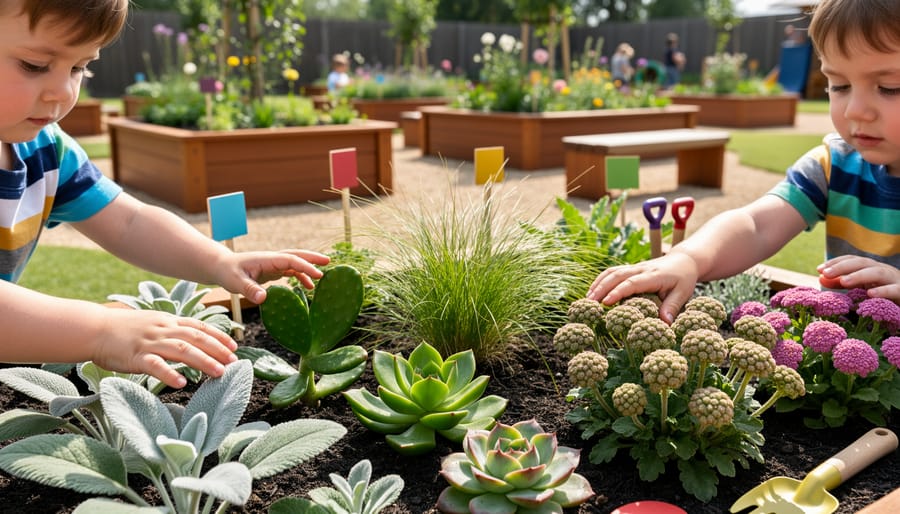
When designing sensory spaces that support baby development, start with texture-rich plants that are safe for exploration. Lamb’s ear, with its velvety soft leaves, is a perfect first touch plant. Ornamental grasses like Mexican feather grass offer gentle, wispy textures that dance in the breeze, captivating babies visually while providing a delicate tactile experience. These safe-to-touch plants give your little one opportunities to explore different sensations without worry.
Color plays a crucial role in visual development during those early months. Babies initially see high-contrast combinations best, so consider pairing deep purple salvia with white alyssum or bright yellow marigolds against dark green foliage. As their vision develops, the full rainbow of your garden becomes an ever-changing picture book of discovery.
Don’t underestimate the power of movement and sound in your sensory design. Wind chimes positioned safely out of reach, rustling bamboo stakes with ribbons tied to them, and ornamental grasses that whisper in gentle breezes all contribute to auditory stimulation. These elements create a dynamic environment that engages multiple senses simultaneously.
I’ve found that other gardening parents in our community love incorporating herbs like mint, basil, and rosemary in raised beds where older babies can safely experience different scents. These fragrant additions make perfect companions to garden learning activities as your child grows.
The beauty of sensory gardening is watching your baby’s development unfold alongside your plants, creating memories and milestones you’ll both cherish for years to come.
Chemical-Free Garden Maintenance for Young Families
When my daughter started crawling, I quickly realized that everything in our garden became a potential snack or hand-to-mouth transfer opportunity. That’s when I completely overhauled our maintenance routine, and honestly, it made gardening simpler and more enjoyable for everyone.
The foundation of chemical-free maintenance starts with healthy soil. I switched to composting our kitchen scraps and fallen leaves, creating nutrient-rich amendments that naturally feed plants without synthetic fertilizers. Your baby might even enjoy helping dump the compost bucket into the bin as they get older, making it a fun learning experience. Adding mulch around plants not only suppresses weeds naturally but also keeps those tiny hands cleaner when they inevitably dig around.
For pest control, I’ve found that encouraging beneficial insects works wonders. Planting herbs like dill and fennel attracted ladybugs and lacewings to our garden, which handled aphid problems before I even noticed them. When slugs became an issue near our strawberry patch, I set up beer traps in the evening, placing them where my daughter couldn’t reach. Hand-picking larger pests during naptime became my oddly therapeutic ritual.
Weeds are simply managed through regular pulling sessions. I keep a cushioned kneeling pad near the sandbox, so when my little one plays, I can tackle weeds nearby. The key is consistency rather than perfection. Some gardeners in our community use vinegar solutions for stubborn weeds on pathways, though I prefer good old-fashioned elbow grease in areas where babies play.
Remember, a few dandelions won’t hurt anyone, and they’re actually quite nutritious if your toddler decides to taste-test them. Embracing imperfection makes chemical-free gardening far less stressful and infinitely safer for your growing explorer.
When to Start: Baby-Proofing During Pregnancy
The best time to start baby-proofing your garden is during the second trimester, when you’re past the initial fatigue but still mobile enough to tackle outdoor projects comfortably. Trust me, you don’t want to be wrestling with thorny rosebushes at eight months pregnant like I did!
Begin your timeline around weeks 14-20 by conducting a thorough garden audit. Walk through your outdoor space with fresh eyes, identifying potential hazards like toxic plants, unstable structures, and standing water features. Create a prioritized list, focusing first on removing genuinely dangerous plants such as foxgloves, oleander, or lily of the valley. These should go immediately, giving you time to replace them with baby-safe alternatives before your little one arrives.
Between weeks 20-28, tackle medium-priority projects like installing fencing, securing gates with childproof latches, and covering ponds or removing water features with accessible standing water. This is also the perfect time to establish your sensory garden beds, as many plants will have a full season to establish before baby becomes mobile.
Save lighter tasks for weeks 28-34, such as padding sharp corners on raised beds, storing garden chemicals in locked sheds, and creating soft landing zones with mulch or grass under play areas. Many expectant parents in our gardening community recommend leaving the final month for simple maintenance only.
Remember, babies typically don’t become mobile until around six months, so you have time to adjust your plans even after birth. The key is removing immediate dangers before delivery and creating a framework you can build upon as your child grows.
Creating a baby-friendly garden isn’t a one-and-done project, and that’s actually part of the beauty. As your little one grows from crawling to toddling to full-speed running, your garden will evolve right alongside them. I’ve watched my own outdoor space transform over the years, from removing every potential hazard to gradually reintroducing more adventurous plantings as my children learned what they could and couldn’t touch.
Here’s the wonderful truth: a safe garden absolutely doesn’t mean sacrificing beauty. Some of the most stunning gardens I’ve seen are entirely child-safe, bursting with lavender, roses, and vibrant cosmos. The key is making thoughtful choices rather than fearful ones.
I’d love to hear from you! What creative solutions have you discovered in your own baby-friendly garden? Have you found clever ways to keep curious hands safe while maintaining that lush, colorful space you adore? Share your experiences in the comments below. Your insights might be exactly what another parent needs to hear, and together we can build a supportive community where everyone feels confident creating outdoor spaces that work for the whole family. Happy gardening, and enjoy watching your garden grow alongside your little ones!