
I still remember the first time I planted zinnias in my backyard. I scattered seeds along a bare fence line in late spring, watered them religiously for two weeks, and then watched in amazement as they exploded into a riot of color that lasted until the first frost. That experience hooked me on flower gardening, and I’ve been trading seeds and tips with fellow gardeners ever since.
If you’re looking to transform your outdoor space with vibrant blooms, you’re in the right place. Flower gardening isn’t as complicated as it might seem, but it does require understanding a few key principles about plant selection, soil preparation, and ongoing care. The beauty of growing flowers is that you can start small with just a few containers on your patio or dive into creating elaborate garden beds that showcase different colors and heights throughout the seasons.
What makes flower gardening so rewarding is the incredible variety available to you. From tough-as-nails marigolds that thrive in hot, dry conditions to delicate sweet peas that prefer cooler weather, there’s a flowering plant suited to every climate, soil type, and skill level. You don’t need a green thumb to succeed, just a willingness to learn what your plants need and observe how they respond to your care.
In this guide, I’ll walk you through everything from choosing the right flowers for your specific growing conditions to understanding where to find quality plants and how to keep them thriving once they’re in the ground. Whether you’re planting your first seed or looking to expand your existing beds, you’ll find practical advice that works in real gardens, not just in theory.
Why Flowering Plants Are the Foundation of Beautiful Garden Design
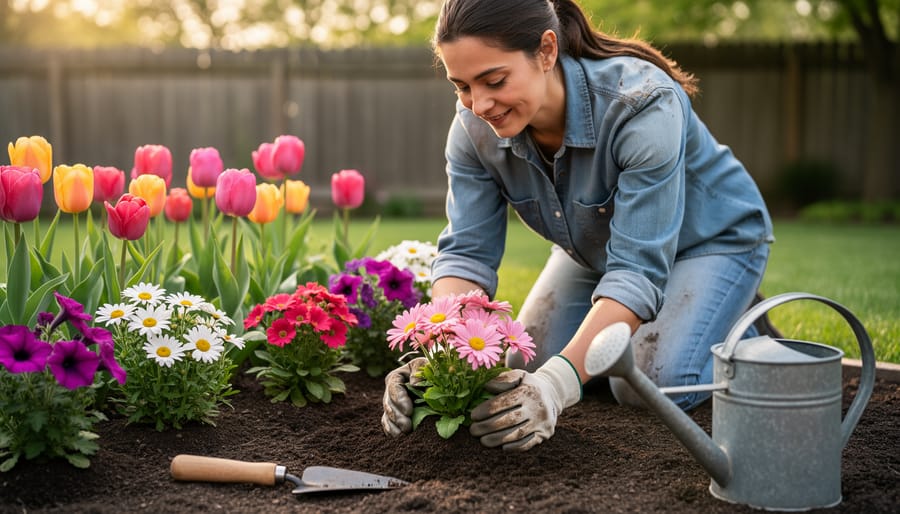
Flowers do more than just look pretty. They’re the working pieces that turn empty soil into a living, evolving composition. When you plant a mix of blooming varieties, you’re essentially building layers of color and texture that shift throughout the growing season, creating interest that static hardscaping or evergreens alone can’t achieve.
Think about how a single daylily can anchor a corner bed in July, or how a drift of early-blooming peonies signals that spring has truly arrived. These moments of bloom provide natural focal points that draw the eye and give each part of your garden a reason to exist. Without flowers, even the most carefully planned landscape feels incomplete, like a stage set waiting for the actors to appear.
The benefits extend beyond visual appeal:
- Layered color that changes week by week as different varieties come into bloom
- Seasonal markers that help you experience the passage of time in your outdoor space
- Pollinator habitat that brings movement and life to your garden
- Natural focal points that organize your design without hardscaping
- Mood enhancement through color choices, from calming blues to energizing oranges
This versatility is why flowers work in virtually any design style. A cottage garden relies on abundant, overlapping blooms to create its romantic, overflowing aesthetic. Modern minimalist spaces use a restrained palette of architectural perennials like hostas with their subtle lavender spikes to punctuate clean lines. Even small urban courtyards gain depth when a few well-chosen flowering shrubs soften hard surfaces.
The emotional payoff matters too. There’s genuine satisfaction in stepping outside to see what’s opened overnight, or in cutting a handful of fresh blooms for the kitchen table. Flowers connect you to the rhythms of your local climate in a way that static plantings never will. They remind you that gardens are living systems, not fixed installations, and that’s precisely what makes them worth tending.
Choosing the Right Flowering Plants for Your Garden
Beginner-Friendly Flowering Plants
When I first started gardening flowers, I gravitated toward varieties that practically took care of themselves. Daylilies became my gateway plant because they tolerate everything from blazing sun to partial shade and keep blooming even when I forgot to water them. These easy, low-maintenance perennials multiply on their own, so you get more plants each year without spending another dollar.
Hostas transformed my shady spots where nothing else seemed to thrive. They’re nearly indestructible, thriving in areas under trees where other flowering plants struggle. The bonus is their architectural foliage, which looks beautiful even when they’re not blooming.
Peonies taught me patience, since they can take a year or two to establish, but once they settle in, they bloom reliably for decades with almost no fuss. I’ve seen 50-year-old peony plants still producing masses of flowers each spring without special attention beyond an annual dose of compost.
Baptisia surprised me with its toughness. This native plant handles drought, poor soil, and neglect while producing dramatic spikes of blue, purple, or yellow flowers. It rarely needs dividing and deer won’t touch it, making it perfect for beginners who want impressive results without constant vigilance.
These four varieties share a crucial trait: they forgive mistakes. Miss a watering? They bounce back. Plant them in less-than-perfect soil? They adapt. That forgiveness gives new gardeners the breathing room to learn without watching plants struggle or die from minor errors.
Flowers for Every Season
A successful flower garden doesn’t just bloom for a few weeks and then fade into green foliage for the rest of the summer. The real magic happens when you layer varieties that pass the flowering baton from one season to the next, keeping your garden vibrant from the first warm days of March through the final frosts of October.
Start your spring with early risers like snowdrops, crocuses, and hellebores, which often push through the last patches of snow. As they fade, daffodils and tulips take center stage in April and May, followed by peonies and baptisia in late spring. This early succession creates continuous color from early spring through early summer without requiring any special expertise.
For summer blooms, daylilies are workhorses that flower for weeks, while coneflowers, black-eyed Susans, and garden phlox keep the show going through July and August. Many varieties rebloom if you deadhead spent flowers, extending their performance even longer.
Late-season bloomers like asters, sedum, and Japanese anemones come into their own in September and October, providing color when most other plants are winding down. These fall stars are particularly valuable because they fill the garden during a time when many beginners assume nothing will flower.
The trick isn’t buying one of everything, but rather selecting two or three varieties from each season that appeal to you. A simple combination of spring bulbs, summer daylilies, and fall asters will give you months of continuous interest without overwhelming your maintenance schedule or your budget.
Understanding Your Growing Conditions
Before you buy a single plant, spend 20 minutes observing your garden space at different times of day. Watch where the sun hits in early morning versus late afternoon, because that will tell you whether a spot is full sun (six-plus hours), part sun (four to six hours), or shade (under four hours). Most flowering plants come with labels indicating their light preferences, and matching those requirements prevents disappointment down the road.
Your soil tells you plenty if you know how to look. Grab a handful after a recent rain, does it form a muddy clump that won’t break apart, or does water drain through immediately leaving dry, sandy particles? Most flowers prefer the middle ground: soil that holds some moisture but doesn’t stay waterlogged. You don’t need a lab test to start; just notice whether your garden stays wet for days after storms or dries out within hours.
Check your USDA gardening zones to confirm which plants will survive your winters, this single step saves money and frustration. Once you understand these three factors, you can match plants to growing site with confidence rather than guessing and hoping for the best.
Where to Buy Quality Flowering Plants in 2026
What to Look for in a Quality Plant
Before you hand over your money, take a minute to really look at what you’re buying. I learned this the hard way after bringing home a beautiful-looking peony that turned out to have root rot hidden beneath the foliage.
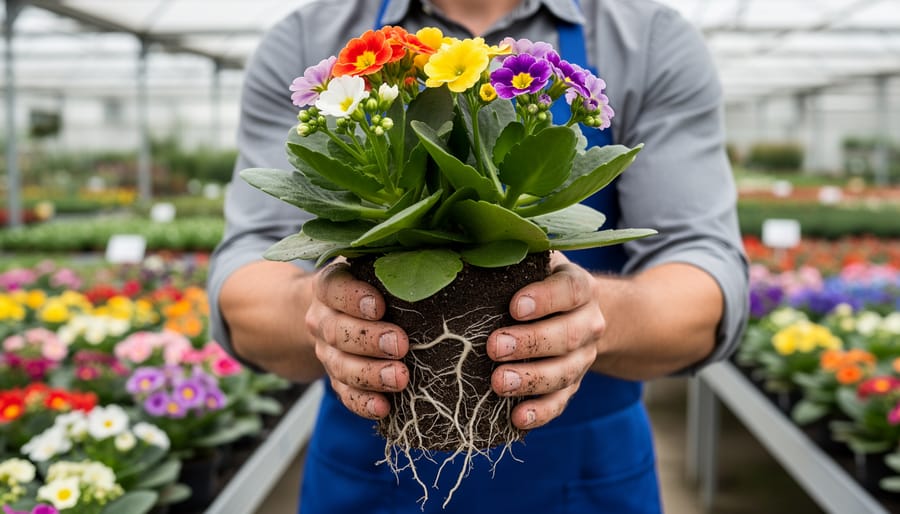
Start with the leaves. They should be a vibrant green without brown edges, yellow spots, or holes. Turn a few leaves over and check the undersides for tiny insects or webbing. Next, gently tip the pot and peek at the drainage holes. Healthy roots are typically white or light tan and firm to the touch. Avoid plants with roots circling tightly around the pot or mushy, dark roots.
The stems matter too. You want sturdy, upright growth with multiple shoots coming from the base. Pass on leggy plants with long, thin stems and sparse foliage, even if they’re discounted. These rarely recover their vigor once planted.
Finally, check for buds rather than full blooms. A plant covered in flowers looks tempting but has already spent its energy. One with tight buds will establish better in your garden and bloom longer. Many reputable suppliers like Great Garden Plants back their stock with guarantees, but choosing wisely from the start saves you the hassle of replacements.
Taking Advantage of Seasonal Sales
Timing your purchases can save money and get you healthier plants. Many garden centers run weekly specials on specific varieties, for example, Beyond the House in Ottawa is offering Baptisia at 20% off from June 19th to June 25th, 2026. These rotating deals let you try new flowers at lower prices while they’re in prime condition.
End-of-season sales in late summer and fall are goldmines for perennials and shrubs. Nurseries need to clear inventory before winter, so you’ll find deep discounts on plants that will establish roots through fall and return stronger next spring. I’ve scored peonies and hostas for half price this way, and they’ve outperformed my spring purchases because they had months to settle in before hot weather arrived.
Essential Care Requirements for Thriving Flowers
Planting Your Flowers the Right Way
Getting your new plants into the ground correctly makes all the difference between struggling specimens and thriving bloomers. I learned this the hard way years ago when half my first perennial order languished because I rushed the planting process.
The good news? Proper planting is straightforward once you know the steps. Here’s how to give your flowering plants the best possible start:
- Dig a hole twice as wide as the root ball but no deeper than the container height. The plant should sit at the same level it grew in the pot.
- Rough up the sides of the hole with your trowel to help roots penetrate the surrounding soil more easily.
- Remove the plant gently from its container and loosen any circling roots by teasing them outward with your fingers.
- Position the plant in the hole, backfill with the excavated soil, and firm it gently to eliminate air pockets.
- Water thoroughly until the soil is saturated, which helps settle everything and ensures good root-to-soil contact.
Space your plants according to their mature width, not their current size. It feels sparse at first, but proper spacing prevents crowding and disease down the line. Most perennials need 18 to 24 inches between plants, though compact varieties may require less.
For soil preparation, you don’t need fancy amendments for most flowering plants. If your soil is heavy clay or very sandy, work in a few inches of compost before planting. Otherwise, the native soil is usually fine.
Watering, Feeding, and Mulching Basics
Getting the basics right with water, food, and mulch makes the difference between flowers that merely survive and ones that thrive. I learned this the hard way when my first perennial bed struggled until I established a consistent routine.
Water deeply rather than frequently. Most established flowering plants need about an inch of water weekly, whether from rain or your hose. Stick your finger two inches into the soil, if it’s dry, water. For larger gardens, water irrigation pumps can automate this process and ensure even coverage. New plantings need daily watering for the first week, then you can gradually reduce frequency as roots establish.
Fertilization varies by plant type. Annuals are heavy feeders that benefit from monthly applications of balanced fertilizer throughout the growing season. Perennials typically need feeding just twice: once in early spring as growth starts, and again after blooming to build strength for next year. I use a slow-release granular fertilizer around hostas and daylilies in April, then forget about it until fall.
Mulch is your secret weapon. A two to three inch layer of shredded bark or compost around your plants keeps soil moist, suppresses weeds, and regulates temperature. Just keep mulch pulled back an inch or two from plant stems to prevent rot. I refresh my mulch each spring, and it’s cut my watering needs nearly in half while keeping my flower beds looking tidy between weeding sessions.
Dealing with Common Challenges
Yellowing leaves usually signal watering issues, either too much or too little. Check the soil moisture a few inches down before watering again, and make sure your plants aren’t sitting in waterlogged conditions. If your flowers refuse to bloom, they might need more sunlight (most flowering plants want at least six hours) or could benefit from deadheading spent flowers to encourage new buds. For minor pest problems like aphids, a strong spray from the hose often does the trick, and you can make your garden safer by avoiding harsh chemicals and choosing companion plants that attract beneficial insects.
I’ve learned that most flower gardening challenges have simple fixes once you understand what your plants are telling you. Keep notes on what works in your specific garden conditions, and don’t hesitate to experiment with different solutions until you find what clicks.
Designing with Flowers: Creating Your Vision
Now that you’ve got healthy plants and solid care habits in place, arranging them into a design that feels intentional rather than random makes all the difference. I’ve watched friends plant gorgeous varieties only to end up with a chaotic jumble because they didn’t think about composition beforehand.
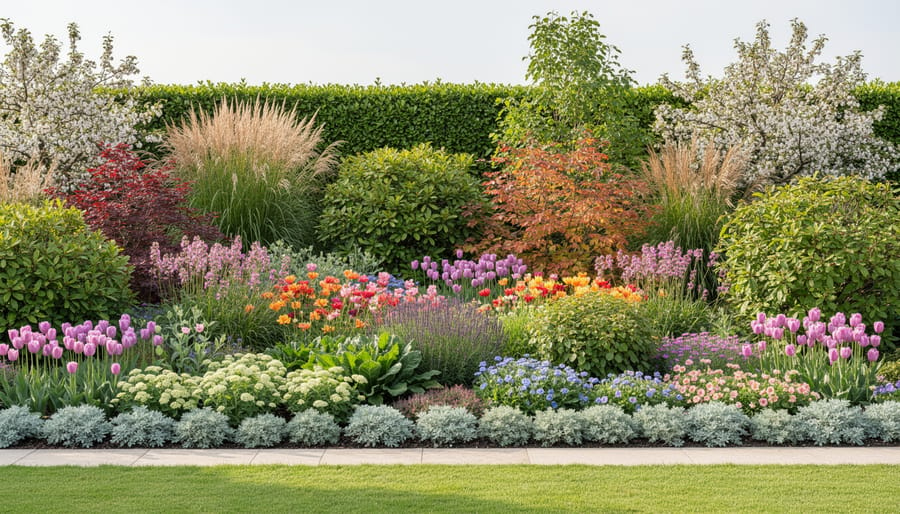
Start with height layering: taller plants like baptisia and shrubs belong in the back or center of beds, mid-height perennials such as daylilies in the middle zone, and low growers like hostas at the front. This stair-step approach ensures every plant gets seen and none get hidden behind neighbors.
Color coordination doesn’t need to be complicated. Pick two or three main bloom colors that complement each other rather than using every shade available. I’ve had great success with purple and yellow combinations (baptisia paired with early daylilies) or keeping it simple with all-white flowers that pop against green foliage. Repetition matters too: plant groups of three or five of the same variety instead of single specimens scattered everywhere, which creates visual rhythm.
Focal points anchor your design and give the eye somewhere to land. A spectacular peony in full bloom, a cluster of tall flowering vines on a trellis, or even a well-placed container of annuals can serve this purpose. If you’re planning a garden near BBQ areas or outdoor living spaces, position your showiest bloomers where you’ll actually see them while relaxing.
Think about how your flowers interact with hardscape elements. Soft flowering plants soften the edges of patios, paths, and seating areas beautifully. For more inspiration on blending plants with outdoor structures, check out these garden furniture ideas that show how blooms can frame and enhance functional spaces.
The best designs evolve over seasons as you notice what works and what doesn’t, so don’t stress about perfection right away.
Looking back on my own journey with gardening flowers, I’m still amazed by how a single blooming daylily or peony can shift your entire relationship with your outdoor space. Each season brings new surprises, and honestly, I’ve learned as much from the plants that struggled as from the ones that thrived immediately.
Here’s what I wish someone had told me at the start: your first few flowering plants don’t need to be perfect. That baptisia you picked up on sale or those hostas from your local nursery are teaching you valuable lessons with every bloom cycle. Small wins, a cluster of flowers that attracts your first butterflies, a color combination that makes you smile each morning, these build the confidence to tackle more ambitious designs.
I’d love to hear about your experiences. What flowering plants have you fallen in love with? Are there specific challenges you’re facing as you plan your garden? Drop your thoughts in the comments below. This community thrives when we share our successes and our questions, and I’m genuinely curious what varieties are winning hearts in gardens across the country this year.
The adventure never really ends. There’s always another flower to discover.