
Leisure gardening is the practice of tending plants without deadlines, yield targets, or pressure to achieve picture-perfect results. Instead of racing to weed every bed or harvest at peak ripeness, you garden when the mood strikes, focusing on enjoyment rather than obligation. This approach has gained traction as more people seek outdoor hobbies that reduce stress rather than add to their to-do lists, transforming gardens from another chore into genuine sanctuary spaces.
The difference shows up in how you spend your time. A leisure gardener might spend twenty minutes deadheading roses simply because the evening light is beautiful, not because the plant desperately needs it. They’ll let a few tomatoes overripen on the vine without guilt. The harvest happens when it happens.
I stumbled into this mindset last summer after burning out on my overly ambitious vegetable garden. I’d planned succession plantings, tracked frost dates obsessively, and felt genuine anxiety about pest pressure. When I finally gave myself permission to just enjoy watering my containers in the early morning without worrying about the untrimmed hedges, something shifted. My garden became a place I wanted to be again.
This doesn’t mean neglecting your plants or embracing total chaos. Leisure gardening still involves care and attention, but it releases you from self-imposed perfection. The goal is a space that nurtures you as much as you nurture it, where progress matters more than perfection and the process outweighs any particular outcome.
What Makes Leisure Gardening Different from ‘Regular’ Gardening?
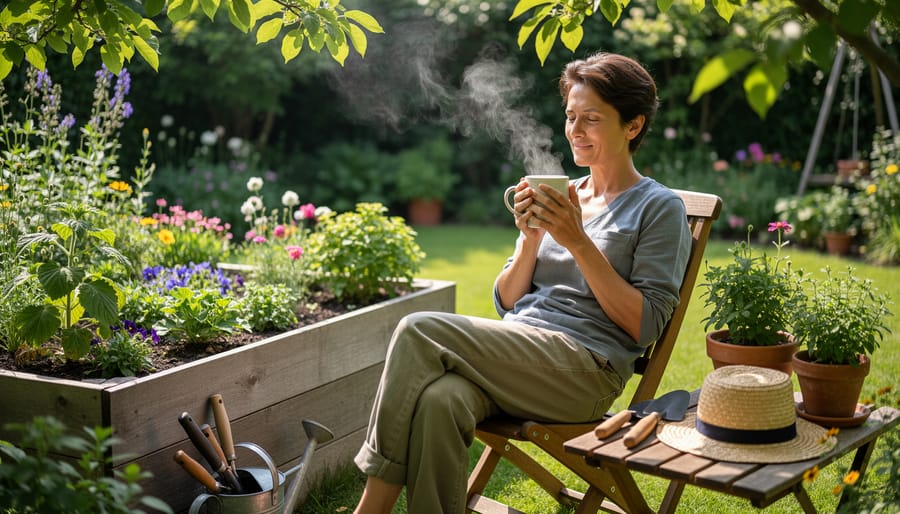
The clearest way I can explain leisure gardening is this: it’s when you stop treating your garden like a project and start treating it like a refuge. Traditional gardening often comes loaded with expectations. We measure success by harvests, count our tomatoes, stress over pest management timelines, and feel guilty when weeds sneak into the borders. We set goals, track progress, and sometimes turn what should be a pleasure into another item on our productivity scoreboard.
Leisure gardening flips that script entirely. It asks you to step into your garden without a to-do list, to water plants because you enjoy the ritual of it, to deadhead flowers because the repetitive motion calms your mind rather than because you’re chasing bigger blooms. The flowers don’t need to be bigger. The harvest doesn’t need to break records. Your garden doesn’t need to impress anyone scrolling past it.
I stumbled into this approach accidentally three summers ago. I’d planted an ambitious vegetable garden with strict succession planting schedules, companion planting charts taped inside my shed, and a spreadsheet tracking varieties and yields. By July, I was exhausted. One evening, I sat down on the grass with no intention of doing anything, just holding my coffee and watching bees work the oregano flowers. I stayed there for twenty minutes. It was the first time all season I’d actually enjoyed being in my garden.
That’s when it clicked. I’d been so focused on outcomes that I’d forgotten why I started gardening in the first place. The next year, I kept some productive beds but also planted a whole section with things that simply made me happy: cosmos that reseeded everywhere, a ridiculous amount of lavender, a bench surrounded by herbs I’d never harvest but loved to brush my hands against. No plan, no pressure. I visited that space almost daily, not because it needed me, but because I needed it.
The mindset shift sounds simple, but it changes everything. You’re not failing if the lettuce bolts. You’re not behind if you skip a week of weeding. You’re just there, in the moment, letting the garden be exactly what it is while you do the same.
The Wellness Movement Meets the Garden: A Growing Trend
Leisure gardening isn’t emerging in isolation. It’s riding a much bigger wave, the wellness movement’s shift away from hustle culture and toward intentional, grounding practices. We’ve seen yoga studios on every corner, meditation apps dominating download charts, and “slow living” becoming more than just an Instagram hashtag. Now, gardens are becoming the next frontier for this cultural shift.
People are craving experiences that connect them to nature without demanding performance metrics or productivity. The garden offers exactly that: a place where you can simply be, where growth happens on its own timeline, and where the only measure of success is how you feel when you’re there.
This convergence of wellness and gardening is showing up in some fascinating ways. Take the Sunflower Garden Music Festival happening August 22nd, 2026, just outside Toronto. It’s Toronto’s first alcohol-free music festival, and it’s being held on a working farm. The day blends live music and DJs with wellness workshops, movement classes, and family programming, all anchored in a garden setting. It’s not about growing the biggest tomatoes or designing the perfect border. It’s about experiencing the garden as a backdrop for connection, creativity, and calm.
Events like this signal something important: gardens are no longer just spaces we work in. They’re destinations we seek out for restoration and joy. The fact that a music festival would centre itself around a farm and sunflowers, rather than a concert hall or park, shows how deeply the leisure gardening mindset is resonating with people who want meaningful, mindful experiences.
This isn’t a fringe movement anymore. It’s becoming mainstream, and it’s changing how we think about what gardens are for, and what they give us in return.
The Mental Health Benefits of Gardening Without Pressure
When I stopped worrying about whether my tomatoes would actually ripen and started noticing how the afternoon light caught their leaves, something shifted. The garden became less about performance and more about presence. That’s when the real mental health benefits kicked in.
Removing the pressure to produce, perform, or achieve transforms gardening from another item on your to-do list into genuine therapy. You’re not failing if the beans don’t yield enough for canning. You’re not wasting time if you spend twenty minutes watching bees work the lavender. This shift alone reduces stress because you’ve eliminated the judgment and expectation that fuel anxiety in the first place.
Research consistently shows that time spent in green spaces lowers cortisol levels and blood pressure, but leisure gardening amplifies these benefits. You’re not racing through tasks to get to the next thing. You can linger. Put seating throughout the garden and actually use it. Let your nervous system fully settle.
One reader told me she’d avoided her garden for months because it felt like judgment every time she looked at the weeds. When she reframed it as “my thinking spot that happens to have plants,” she started going out there daily with her coffee. The weeds are still there, but so is she, calmer and more grounded. That’s the point.
Leisure gardening also offers creative expression without stakes. You can experiment with color combinations, try unusual plant pairings, or create little vignettes just because they make you smile. There’s no judge, no competition, no right answer. This kind of low-pressure creativity feeds a part of us that often gets neglected in our productivity-obsessed culture.
The repetitive motions of deadheading, weeding, or watering become moving meditation. Your hands are busy, your mind can wander or settle, and you’re connected to something alive and growing. That connection to nature, to cycles bigger than our daily dramas, puts our stress in perspective.
When gardening stops being another obligation and becomes your refuge, it genuinely heals. You’re not measuring success by the harvest. You’re measuring it by how you feel when you’re out there, and how that peace carries into the rest of your day.
How to Start Your Own Leisure Gardening Practice
Pick Plants That Bring You Joy (Not Just ‘Good Performers’)
Forget the “best plants for your zone” lists for a moment. Leisure gardening invites you to choose plants that spark something in you, whether that’s nostalgia for your grandmother’s roses, the heady scent of night-blooming jasmine, or the sheer drama of dinner-plate dahlias.
I learned this when I planted sweet peas purely because I loved cutting armfuls for the kitchen table, even though they’re fussy and short-lived. That decision transformed my morning routine into something I looked forward to, rather than another chore to tick off.
If you’re drawn to plants you can touch and smell, try lamb’s ear for its velvety leaves or chocolate cosmos for its surprising cocoa fragrance. Start a kitchen garden with purple basil instead of the standard green just because you love the colour. Container gardening works beautifully for experimenting with plants that simply make you smile.
The point isn’t whether these plants are practical. It’s whether they give you a reason to wander outside with your coffee and linger.
Create Spaces for Lingering, Not Just Working
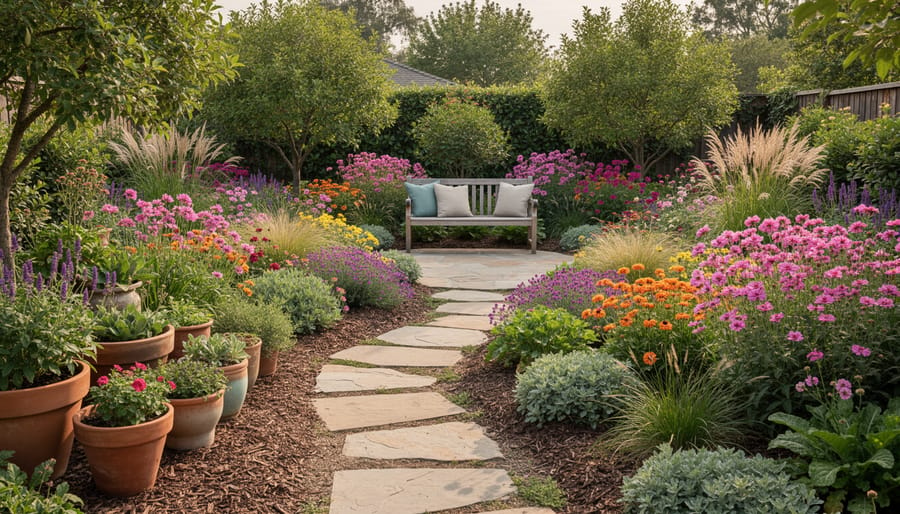
Your garden shouldn’t be just a workspace. Think of it as your outdoor living room, a place that invites you to sit down and actually stay awhile. Start by positioning a bench or chair where you’ll naturally want to pause, maybe overlooking your favorite flowers or tucked under a shade tree. I discovered this by accident when I dragged an old wooden chair into a corner to take a break one afternoon. That spot became where I drank my morning coffee, and suddenly the garden felt less like chores and more like home.
Browse through garden furniture ideas that match your style, whether that’s a weathered bistro set or a simple hammock strung between posts. Add a small side table for your tea or book. Plant fragrant herbs like lavender or mint nearby so you’re surrounded by scent. Consider the view from where you’ll sit, what do you want to see? Arrange your most beautiful plants within that sightline, creating a living picture that changes with the seasons. The goal is making your garden pull you in, not push you away with a mental to-do list.
Embrace ‘Garden Time’ as Your Meditation
I’ll be honest: I used to treat weeding like a race against the clock, mentally ticking off tasks while my mind wandered to emails and errands. Then one morning, I decided to just stay with it. Really feel the cool soil, notice the satisfying snap of roots pulling free, watch how the sunlight shifted across the beds. That twenty minutes became the calmest part of my week.
Garden time works as meditation because it anchors you in the physical world. Your hands are busy, which quiets the mental chatter. Try this: next time you’re watering, focus completely on the sound of water hitting leaves, the weight of the hose, the darkening soil. If you’re exploring water irrigation tips approach setup as a chance to slow down rather than rush through installation.
Even deadheading spent blooms becomes meditative when you’re not hurrying. Pick one plant and give it your full attention for five minutes. Notice its scent, the texture of its leaves, how it’s grown since last week. This isn’t about clearing your mind completely, thoughts will come, but about gently returning your focus to what your hands are doing right now.
Building Community Around Leisure Gardening
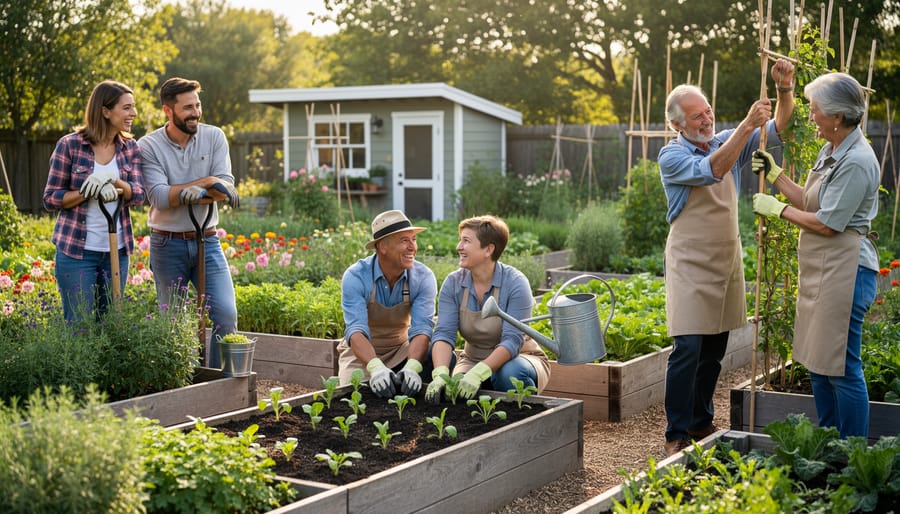
One of the most rewarding aspects of leisure gardening is discovering that you’re not alone in this mindset. Across the country, gardeners are forming communities around the idea that gardens should be savored, not perfected. Local garden clubs are shifting away from competitive flower shows toward casual garden tours where members visit each other’s spaces to simply enjoy the beauty and exchange ideas over tea. These gatherings celebrate what each person has created as a garden for lingering not what they’ve achieved on paper.
Online communities have flourished too. Facebook groups and Instagram hashtags dedicated to “slow gardening” or “mindful gardening” connect thousands of people who share photos of their morning coffee in the garden, their favorite quiet corner, or the single bloom they stopped to admire. These spaces feel different from traditional gardening forums, less focused on problem-solving and more on celebrating the experience itself.
Events are catching on to this shift as well. The Sunflower Garden Music Festival on August 22nd, 2026, just outside Toronto, perfectly captures this spirit. As Toronto’s first alcohol-free music festival, it blends live music, wellness workshops, and movement classes on a farm setting, creating a family-friendly environment where gardening themes meet mindfulness and celebration. It’s not about learning twelve new pruning techniques; it’s about experiencing gardens as places of joy and connection.
Look for similar gatherings in your area, whether it’s a plant swap with no pressure to bring rare specimens, a garden walk that prioritizes atmosphere over achievement, or simply inviting a neighbor over to sit among your flowers. Building community around leisure gardening means finding your people who understand that sometimes the best garden conversation is just comfortable silence while you both watch the bees work.
Here’s your chance to step off the treadmill and into something slower, quieter, and infinitely more rewarding. Leisure gardening isn’t about abandoning your ambitions or letting your beds turn into chaos. It’s about reclaiming the pleasure that brought you to the garden in the first place. Maybe that means spending twenty minutes deadheading roses just because you love how they smell. Maybe it’s sitting on your porch with morning coffee, watching the bees work the lavender. Maybe it’s finally planting that whimsical climbing rose you’ve admired for years, regardless of whether it fits your “plan.”
Your garden doesn’t need to be productive, Instagram-worthy, or weed-free to be wonderful. It just needs to be yours, and you need to be present in it. So go ahead: plant something impractical, linger where you’d normally rush, let the tomatoes sprawl if they want to. The point isn’t perfection. It’s joy. It’s slowing down enough to notice the texture of a leaf or the way light hits your garden at dusk.
This is your invitation to try leisure gardening in 2026. Your garden is waiting, and it has nothing to prove.