

Japanese gardening tools stand apart through three defining qualities: they’re precision-forged to cut cleanly rather than tear plant tissue, they’re ergonomically designed for hours of comfortable use, and they’re built to last decades with proper care. These aren’t merely sharper versions of Western tools. The fundamental difference lies in how they interact with plants and soil, from the single-bevel edge geometry that creates cleaner cuts to the hand-forged carbon steel that holds an edge far longer than mass-produced alternatives.
I first picked up a hori hori knife at a tool swap three years ago, skeptical that a $45 trowel could justify its price. Within one planting season, I’d retired every cheap plastic-handled digger in my shed. That worn leather grip and the way the blade sliced through root-bound perennials without shredding them changed how I thought about garden tools entirely.
What makes 2026 an interesting moment for these tools is accessibility. Where Japanese gardening implements once required hunting through specialty catalogs or expensive imports, quality options now range from $30 entry-level pieces to $200+ heirloom tools, with a growing community of gardeners sharing maintenance tips and techniques online. The challenge isn’t finding these tools anymore. It’s understanding which ones match your actual gardening needs and whether the investment makes sense for how you garden.
The learning curve exists, particularly with pruning shears and saws that demand different cutting angles than Western tools. But gardeners consistently report that once they adjust their technique, they rarely go back.
What Makes Japanese Gardening Tools Different
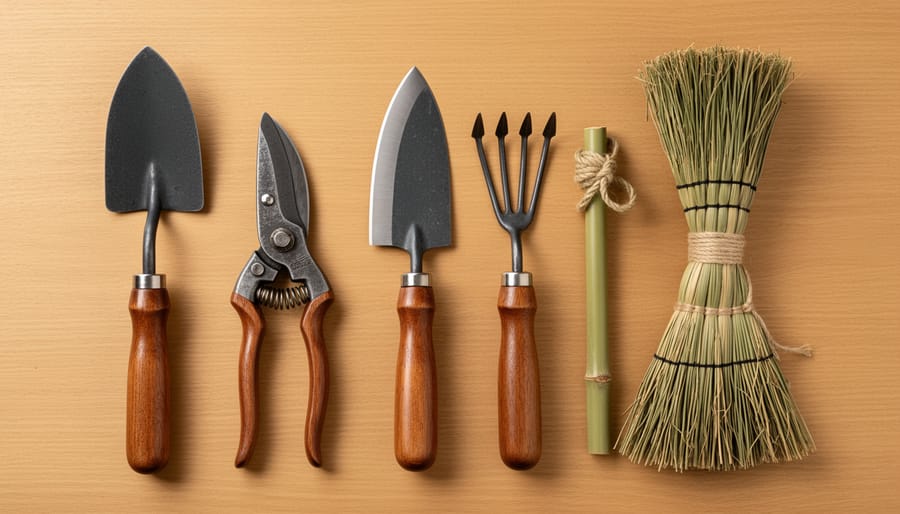
I’ll be honest, when I first held a Japanese pruning shear, I thought someone was playing a prank on me. The weight felt all wrong compared to my trusty Western secateurs, and the handles seemed oddly positioned. Then I made my first cut, and everything clicked. The blade sliced through a rose cane so cleanly that I had to look twice to confirm I’d actually cut it. That moment marked the beginning of my fascination with what makes these tools fundamentally different.
The philosophy behind Japanese garden tools centers on a concept that took me years to truly appreciate: the tool should become an extension of your hand, not something you wrestle with. Western tools often rely on mechanical advantage, leverage, ratcheting mechanisms, cushioned grips. Japanese craftsmen take the opposite approach. They obsess over balance points, blade angles, and the subtle weight distribution that lets the tool do the work while your hand simply guides it.
This philosophy translates into some technical choices that sound intimidating but actually make perfect sense once you understand them. Most Japanese garden tools use high-carbon steel rather than stainless steel. Carbon steel holds a sharper edge longer and can be honed to a finer point, which means cleaner cuts that heal faster on your plants. The trade-off? It requires a bit more maintenance to prevent rust. I wipe mine down with camellia oil after each use, and it’s become such a quick habit that I barely think about it.
The hand-forging tradition matters more than I initially realized. When a craftsman hammers and shapes each blade individually, they’re not just making it look pretty. The forging process aligns the steel’s grain structure along the blade’s edge, creating a toughness that stamped or cast tools can’t match. You’ll see the telltale hammer marks on many traditional tools, those aren’t decorative; they’re evidence of the forging process that gives the blade its character.
The blade geometry deserves special mention. Japanese tools typically feature asymmetrical bevels, with one side of the blade ground at a sharper angle than the other. This design lets the blade slide through material with less friction and gives you surprising control over the cut’s direction. My nata hatchet carves through green wood like butter because of this principle, and my pruning saw tracks exactly where I aim it.
What strikes me most, though, is how these design choices work together. The balance, the steel, the geometry, each element reinforces the others to create tools that feel alive in your hands.
Essential Japanese Tools Every Gardener Should Know
Japanese Gardening Shears (Secateurs)
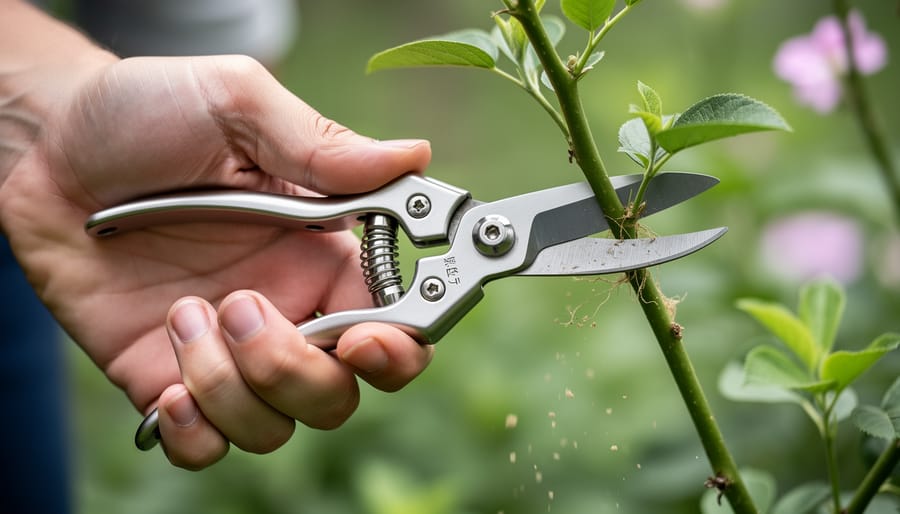
I’ll never forget the first time I used Japanese secateurs on a stubborn rose stem. Western pruners would crush the tissue, leaving ragged wounds prone to disease. These? One clean slice, and I could see the cells so neatly severed I half-expected them to heal on the spot. That moment converted me.
Japanese gardening shears, or secateurs, approach cutting as an art form rather than brute force. The blade geometry typically sits at a sharper angle than Western designs, around 30 degrees versus 45, which means less crushing and more slicing action. You’ll notice the weight distribution immediately, these tools balance in your hand differently, with the fulcrum positioned to maximize leverage while minimizing hand fatigue during extended pruning sessions.
The cutting motion feels almost surgical. Most Japanese secateurs employ bypass designs where a razor-sharp blade passes cleanly against a counter blade, creating that satisfying snick sound that tells you you’ve made a proper cut. The spring mechanisms are subtler too, providing just enough resistance to return the blades without that aggressive snap you get from heavier Western springs.
When selecting your first pair, watch for these qualities:
- Blade angle between 25-35 degrees for clean slicing action
- Coil or flat spring mechanism that feels smooth, not jerky
- Handle shape that follows your natural grip without pressure points
- High-carbon steel composition for edge retention and resharpening ease
Price-wise, expect to invest properly. The Mini Sentei Gardening Secateurs run $115.00, while the Tobisho Pruner-B Style sits at $97.90 at Hida Tool. Yes, that’s significantly more than hardware store pruners, but consider this: I’m still using the same pair I bought three years ago, and they cut better now (after proper maintenance) than when new. Budget options wear out, dull quickly, and ultimately cost more through replacement.
These shears excel at delicate work, deadheading perennials, harvesting herbs, shaping bonsai, or any task where precision matters more than speed. For thick branches you’ll want a saw, but for everything up to finger-thickness, Japanese secateurs deliver cuts that genuinely help plants rather than just removing growth.
Japanese Sickles (Kama)
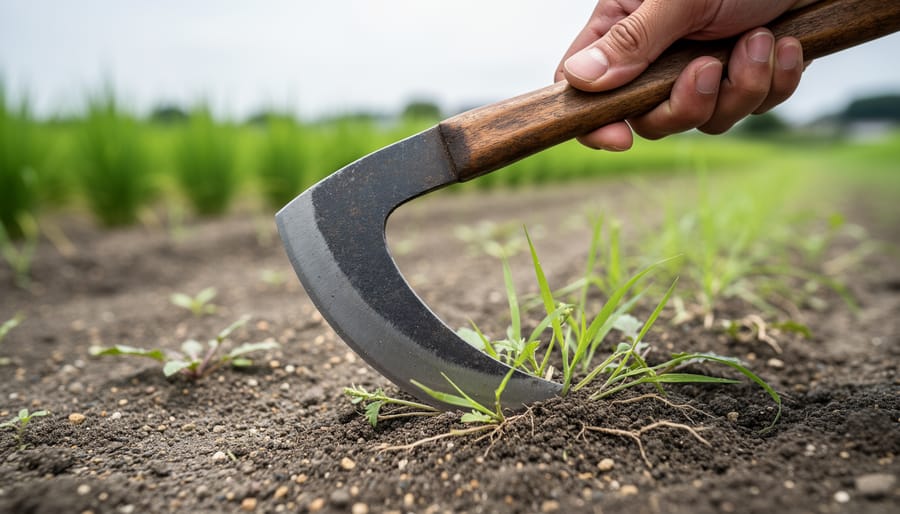
I still remember the first time I watched my neighbor slice through a tangle of grass and weeds with her grandfather’s kama. The curved blade moved almost effortlessly, and I immediately understood why these sickles have remained essentially unchanged for centuries.
The traditional Japanese weeding sickle comes in several distinct styles, each designed for specific tasks. The most common is the medium-curve blade, perfect for cutting down grasses and harvesting herbs close to the ground. Longer, straighter models work brilliantly for slicing through thicker vegetation, while the tightly curved versions excel at precision weeding between plants.
The blade edge makes a bigger difference than you might expect. Serrated edges grab and cut through fibrous stems and grasses with minimal effort, making them ideal for clearing overgrown areas. Smooth edges offer cleaner cuts for harvesting vegetables and tender greens, similar to how you’d choose your kitchen knives based on the task.
Proper technique took me a few sessions to master. You want to pull the blade toward you in a sweeping motion rather than hacking downward. This pull-stroke feels unnatural at first if you’re used to Western tools, but it gives you far more control and reduces strain on your wrist.
Sarah from our community forum shared that her kama has become indispensable for managing her strawberry patch, letting her clear runners and weeds without disturbing the shallow roots. Another member, Tom, keeps a serrated version specifically for his prairie restoration work where tough native grasses would dull ordinary tools in minutes.
The learning curve is real but short. After a weekend of use, that pulling motion becomes second nature, and you’ll wonder how you managed before.
Japanese Hatchet (Nata)
The nata is where Japanese garden tools get seriously practical. Think of it as a cross between a machete and a hatchet, but lighter and more controllable than either. I keep mine propped near the garden shed door because it handles so many tasks that would otherwise mean switching between multiple tools.
The magic of a nata lies in its blade design. Single-bevel natas have one flat side and one angled side, which makes them exceptional for precision work like notching stakes, splitting kindling for the fire pit, or carving custom plant supports. The flat side rides against your work piece, giving you a reference surface that prevents the blade from wandering. Double-bevel natas, sharpened on both sides like Western knives, offer more versatility for general chopping and splitting where you don’t need that guided precision.
I’ve used mine for splitting bamboo stakes (it glides through like butter), trimming thick vine growth that would bog down shears, and even shaping the cedar posts for my bean trellis. Where a Western hatchet tends to wedge and stick in green wood, the thinner nata blade releases cleanly with each stroke. The balanced weight distribution also means less fatigue when you’re working through a pile of pruned branches.
Safety matters with any sharp tool. Keep your free hand well behind the blade, work on a stable chopping block, and store the nata with a blade guard. These aren’t complicated garden safety fixes, but they’ll keep you enjoying your nata for decades rather than nursing a careless cut. The carbon steel blade requires the same post-use wipe-down as other Japanese tools, but that becomes automatic after your first few sessions.
Japanese Gardening Saws
The first time I picked up a Japanese pruning saw, I felt slightly foolish holding it backward, or so I thought. Western saws cut on the push stroke, but Japanese saws work on the pull. That single design difference changed everything about how I approached cutting tasks in the garden.
Pull-stroke saws require thinner blades because you’re pulling tension through the cut rather than pushing and risking buckling. Thinner blades mean narrower kerfs, which translates to less wasted wood, cleaner cuts, and significantly less effort. I can make precise cuts one-handed in tight spots where my old Western saw would have me wrestling for position and leverage. The control feels intuitive once you stop fighting your instinct to push.
For pruning, these saws are revelatory. The teeth are impulse-hardened, staying sharp far longer than standard saw teeth, and they slice through green wood without the tearing and crushing that damages bark and invites disease. I use mine for anything from removing small branches to cutting back overgrown shrubs. The curved blade styles are particularly brilliant for getting into dense growth where straight saws bind.
Japanese gardening saws also excel at small carpentry projects, building trellises, cutting stakes, or fashioning bamboo supports. The precision lets you work to exact measurements without the splintering and rough edges that require sanding or cleanup. Some gardeners in our community swear by folding models that tuck safely into a tool belt, while others prefer fixed-blade versions for heavier work.
Once you adjust to the pull motion, which takes maybe ten minutes, you’ll wonder why anyone pushes a saw through wood. It’s simply more efficient.
Choosing Your First Japanese Garden Tool
If you’re eyeing your first Japanese garden tool, start with what you already do most. Secateurs make the best entry point for most gardeners because pruning is universal, whether you’re trimming roses, shaping shrubs, or snipping herbs. A quality pair of Japanese gardening shears transforms these daily tasks from tedious to satisfying. Yes, you’ll spend around $100 to $115 (like the Mini Sentei Gardening Secateurs), but these aren’t impulse-buy prices, think of it as committing to a tool that’ll still feel sharp and balanced in ten years.
For kitchen herb gardening or container gardening secateurs handle 80% of your cutting needs. If you’re managing larger spaces with woody growth, consider a Japanese saw as your first purchase instead, the pull-stroke design excels at clean limb removal without the shoulder fatigue of Western push saws.
The maintenance concern? It’s simpler than you think. Wipe your blade after use, apply a thin coat of camellia oil monthly, and you’re done. Carbon steel does require this minimal routine, but it becomes as automatic as washing your coffee mug. The learning curve is gentle too, these tools feel intuitive in hand because their balance and sharpness actually reduce the technique needed compared to fighting dull blades.
Skip the sickle or nata unless you have specific tasks waiting. A kama shines for extensive weeding or harvesting, while a nata serves gardeners splitting kindling or clearing brush. For general lawn maintenance tips and ornamental beds, secateurs deliver immediate, noticeable improvement in your daily work.
Start with one excellent tool rather than a mediocre set. The difference in hand feel and cutting performance will either convince you to expand your collection or confirm you’re happy with what you have, both outcomes beat a drawer full of regretted purchases.
Caring for Your Japanese Tools
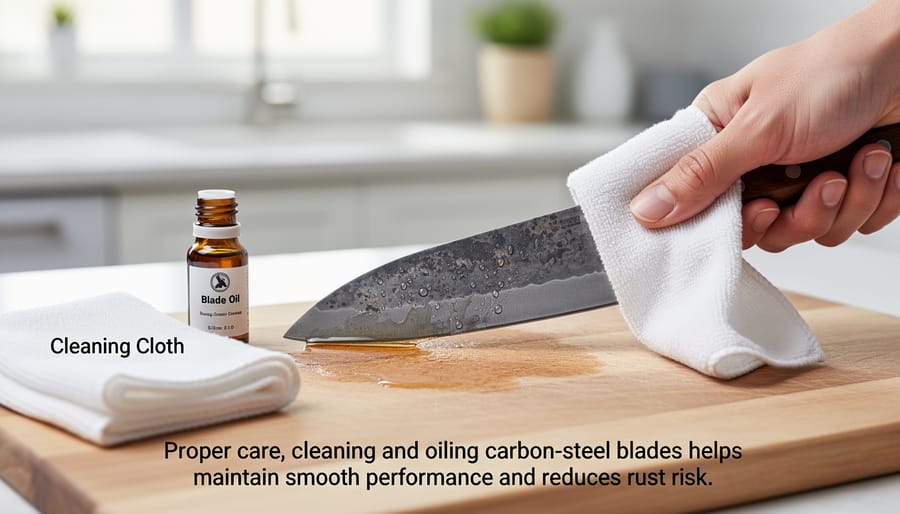
I’ll be honest: the first time I wiped down my Japanese pruning shears after a day’s work, I nearly skipped the extra step of applying oil. It seemed fussy. But here’s what I’ve learned after three years of using these tools daily, that five-minute routine isn’t fussiness, it’s respect for craftsmanship that will last decades if you treat it right.
Japanese tools are almost always made from high-carbon steel rather than stainless. Carbon steel holds a sharper edge longer and cuts with less resistance, which is why your sekateurs slice through green stems like butter while your old stainless pair crushes them. The trade-off? Carbon steel will rust if you neglect it. Not “might rust”, will rust, especially in humid climates or if you leave it damp overnight.
The good news is that proper care becomes automatic once you establish a rhythm. After each gardening session, follow this basic sequence:
- Wipe all blades and metal surfaces with a dry cloth to remove sap, soil, and moisture.
- If you’ve been cutting diseased plants or working in muddy conditions, clean with warm water and a soft brush, then dry immediately and thoroughly.
- Apply a thin layer of camellia oil (traditional choice) or any food-grade mineral oil to all metal surfaces using a clean rag.
- Store tools in a dry location, ideally hanging or in a tool roll rather than piled in a damp shed.
That’s it. Four steps, maybe five minutes total. I keep a small bottle of camellia oil and a dedicated rag in my garden basket, so maintenance happens right there at the potting bench before I head inside.
Sharpening is the other skill worth developing, though you won’t need to do it often if you’re using quality Japanese tools properly. Most can go months between sharpenings with regular use. When the time comes, invest in a good whetstone (a 1000-grit stone handles most garden tool sharpening) or find a local sharpening service that understands single-bevel Japanese blades. Don’t use a grinding wheel, the high heat ruins the temper of the steel.
One community member told me she was initially intimidated by the maintenance requirements, but now she finds the ritual meditative. “It’s like the Japanese tea ceremony for gardeners,” she said. I get that. There’s something satisfying about caring for tools that were made with intention, knowing they’ll outlive cheaper alternatives by decades.
The Community Speaks: Real Experiences with Japanese Tools
I posted a question in our Plant Geek forum last month asking who’d made the leap to Japanese tools, and the responses surprised me. Sarah from Portland shared that her Tobisho secateurs changed how she approached rose pruning entirely. “I went from dreading thorny tangles to actually looking forward to deadheading,” she wrote. “The precision means I can get into tight spots without mangling stems.” She paid $97.90 at Hida Tool and considers it the best money she’s spent on her garden.
Mike in Austin chimed in about his nata hatchet experience. He’d been splitting bamboo stakes with a Western hatchet for years, getting frustrated with the wedging and splitting. His Japanese nata sliced through cleanly on the first stroke. “It’s the difference between forcing and flowing,” he explained. Several members echoed this theme of tools that work with you rather than against the material.
What caught my attention was how many folks mentioned the unexpected maintenance lessons. Jenny from Vancouver admitted she’d never sharpened a tool properly until her Japanese pruning saw demanded it. “I learned more about tool care in three months than I had in ten years of gardening,” she said. Now she maintains all her tools better, not just the Japanese ones. It’s become part of her gardening rhythm, like checking her irrigation water pumps at the season’s start.
The consensus? Start with one quality piece rather than a full set. Master it, learn to care for it, then expand. Nobody regretted the investment, though several wished they’d begun sooner. Drop a comment below if you’ve tried Japanese garden tools. Which one converted you, and what surprised you most about the experience?
Looking back over the past few years, I’ve watched Japanese gardening tools shift from a specialist curiosity to something that’s sparked genuine conversation in gardening circles. In 2026, more of us are discovering what craftspeople have known for generations: these tools really do change how you work in the garden.
Yes, spending $115 on secateurs or nearly $100 on pruners feels like a leap when you’re used to budget options from the hardware store. I won’t pretend otherwise. But here’s what I’ve come to understand through my own experience and countless conversations with fellow gardeners: this isn’t about buying expensive tools for the sake of it. It’s about investing in implements that genuinely perform better, last longer, and make your time in the garden more precise and satisfying. The difference becomes clear after your first season when you’re still reaching for that Japanese sickle while other tools sit neglected in the shed.
What excites me most is how this trend has brought our community together around shared discoveries. We’re learning from each other which tools suit different gardening styles, swapping maintenance tips, and honestly discussing what’s worth the investment versus what’s just nice to have.
If you’ve been curious about Japanese garden tools, I’d encourage you to start with one piece that matches your most frequent task. Experience the difference yourself. And once you do, come back and share your thoughts with us. Which tool surprised you? What did you learn about your gardening practice through using it? Your insights help all of us grow as gardeners, and I’m always eager to hear what’s working in your plot.