

Bush beans and square foot gardening seem like a perfect match, but there’s a twist that trips up nearly everyone who tries it: different square foot gardening sources recommend completely different spacing for the same plants. You’ll find reputable guides telling you to plant 9 bush bean seeds per square foot, while others, including materials from the official Square Foot Gardening Foundation, recommend 16 plants in that same space. Neither approach is wrong, and that’s the liberating truth I wish someone had told me three seasons ago when I stood in my garden, seed packet in hand, paralyzed by conflicting advice.
The confusion stems from the method itself. Square foot gardening divides raised beds into a grid of one-foot squares, with each square holding 1, 4, 9, or 16 plants depending on size. Bush beans fall into that tricky medium-plant category where interpretation varies. The classic Mel Bartholomew approach often shows 9 beans per square (planted in a 3×3 grid), giving each plant about 4 inches of space. Meanwhile, updated foundation materials classify bush beans as small enough for 16 per square, arranged 4×4 with roughly 3 inches between plants.
I’ve tested both methods in my own 4×4 beds, and here’s what the experience taught our community: tighter spacing can work beautifully with determinate varieties and attentive watering, while the roomier 9-plant grid forgives inconsistent care and suits larger, sprawling cultivars. The real question isn’t which number is correct, but which fits your garden conditions and the time you can invest.
What You’ll Need to Get Started
Getting your square foot garden ready for bush beans is simpler than you might think. You don’t need a huge plot or fancy equipment, just a few basic supplies and you’re ready to go. The beauty of this method is that it works whether you’re starting fresh or adapting an existing raised bed.
Here’s what you’ll need to gather:
- A raised bed, typically 4×4 feet (1.2m × 1.2m), this gives you 16 individual square-foot sections to work with
- Grid materials to divide your bed into 1-foot squares: string, thin wood strips, or even permanent markers work perfectly
- Bush bean seeds in your chosen variety (compact types like ‘Provider’ or ‘Contender’ are ideal; avoid sprawling heirloom varieties for tighter spacing)
- Basic gardening tools: a hand trowel for planting and a watering can or gentle hose attachment
- Optional: plant labels or markers to track what you’ve planted and when
The square foot gardening method itself is wonderfully straightforward. You divide your raised bed into a 1-foot grid, then plant a set number of seeds or seedlings in each square based on the plant’s mature size. Smaller plants like radishes get 16 per square, medium plants get 4 or 9, and larger plants like tomatoes get just 1 per square.
Bush beans fall into that medium category, which is where things get interesting, you’ll see both 9-per-square and 16-per-square recommendations from reliable sources, and we’ll dig into why that is in the next section. For now, just know that either approach works, and the method adapts beautifully to small spaces. If you’re really tight on room, this system is even more space-efficient than traditional container gardening while still keeping everything organized and manageable.
Understanding the Spacing Debate: 9 vs. 16 Plants Per Square
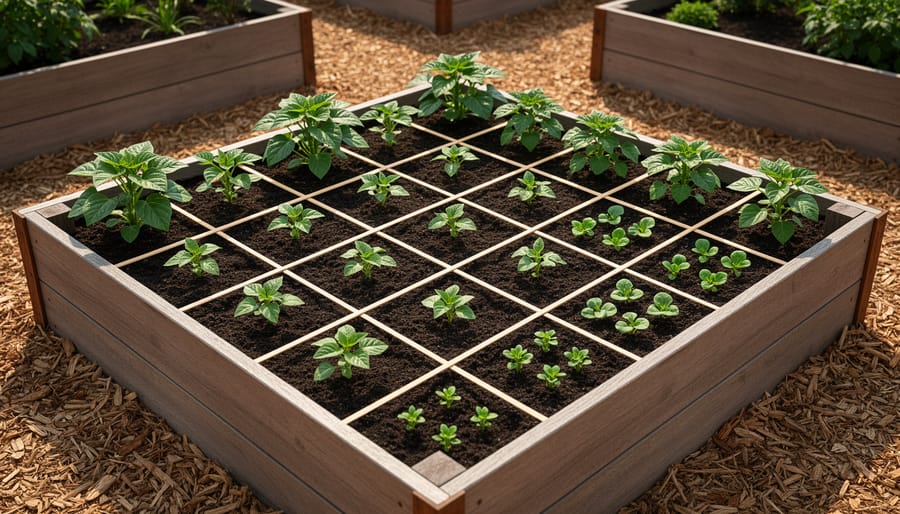
Square foot gardening simplifies plant spacing with a clean formula: 1 large plant, 4 medium-large, 9 medium, or 16 small plants per square foot. Bush beans sit right in the middle of that system, classified as medium plants in most planting guides. Here’s where it gets interesting, and a bit confusing for new gardeners. You’ll find both 9-per-square and 16-per-square recommendations from authoritative sources, including the official square foot gardening resource itself. Neither is wrong, and that’s not a mistake in the system.
The 9-plant spacing arranges beans in a 3×3 grid within each square, giving each plant about 4 inches of space in all directions. This setup allows better airflow around the foliage, which can reduce disease pressure in humid climates or during wet growing seasons. I’ve noticed that beans spaced this way tend to produce slightly larger, easier-to-pick pods, and the plants look less crowded at full maturity. The 16-plant approach fits beans in a 4×4 grid, spacing them just 3 inches apart. This tighter arrangement maximizes yield in limited space and works beautifully if you’re diligent about watering, feeding, and monitoring for any signs of stress or disease.
I tried both methods side by side one summer, planting half my bed at 9 per square and half at 16. The 16-plant squares gave me noticeably more beans overall, but they required more attention during a particularly humid stretch in July. The 9-plant squares were more forgiving and easier to maintain, with better air circulation that kept the leaves dry after morning watering.
There’s no single classic or best method here. Your choice depends on the bush bean variety you’re growing (compact types handle tighter spacing better than sprawling ones), your regional climate, how much time you have for garden upkeep, and whether you’re prioritizing maximum yield or ease of care. Some gardeners even mix both approaches in the same bed, using 16-plant squares for their most compact varieties and 9-plant squares for bushier cultivars. The beauty of square foot gardening is that you can experiment on a small scale and adjust your approach as you learn what works in your specific conditions.
Important Considerations Before You Plant
Before you drop those first seeds into the grid, a few crucial checks will save you from disappointment, and possibly a completely failed planting.
First, check your last frost date for your region. Bush beans are warm-season plants that won’t tolerate even a light freeze, so wait until all danger of frost has passed and soil temperature reaches at least 60°F (15°C). If your soil is waterlogged from spring rains or recent watering, hold off; beans need well-drained soil to germinate successfully.
Next, verify that you’ve actually bought bush bean seeds, not pole beans. The packets look similar, but pole varieties will send out long vines that need trellising, completely defeating the compact design of your square foot grid. Bush beans stay low and self-supporting, which is why they work so well in this method.
Here’s where square foot gardening really shines: succession planting. Instead of filling every square on day one, plant a few squares now and then add more every two to three weeks through early summer. This staggers your harvest so you’re picking fresh beans for months instead of drowning in a single glut.
Growing seasons vary widely, many regions have four to six months of frost-free weather, so plan your succession schedule accordingly. In shorter-season climates, you might only get two or three plantings; in longer seasons, you can keep going well into summer. Basic garden safety applies too: watch for trip hazards around raised beds and keep tools organized.
Step-by-Step: Planting Bush Beans in Your Square Foot Grid
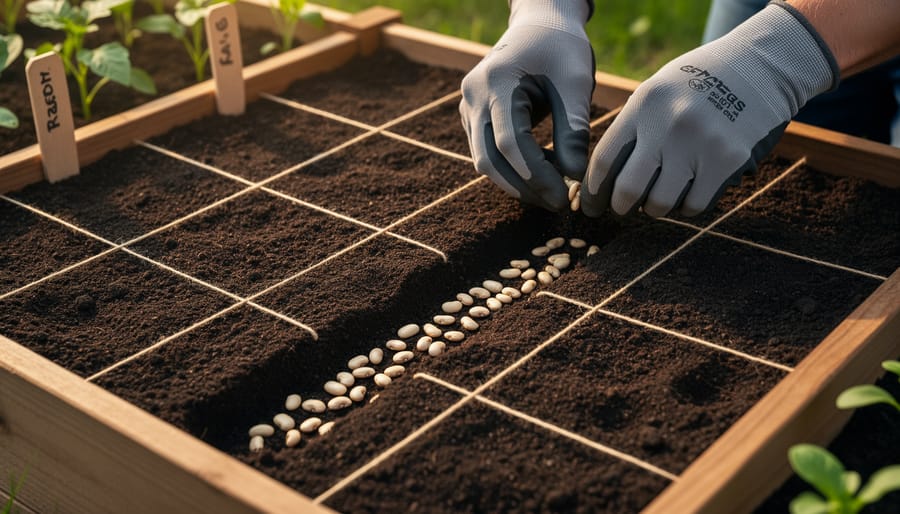
Now that you’re ready to get your hands dirty, let me walk you through the actual planting process. I remember the first time I laid out my grid, I was so focused on getting the spacing perfect that I forgot to enjoy the moment. Don’t worry about making it flawless; you’ll get better with each square you plant.
- Divide your raised bed into 1-foot squares using your grid system. If you’re using string, tie it taut across the bed at 12-inch intervals in both directions, creating a grid pattern. Wood strips work beautifully if you want something permanent, just nail or screw them to the top edges of your bed frame. Even simple markers at each corner of your imaginary squares will do the job.
- Choose your spacing for this particular square. Will you plant 9 or 16 bush bean plants? Think about what you learned in the spacing section, 9 gives your plants more breathing room and works well in humid climates or if you’re growing a bushier variety. 16 maximizes your harvest in a small space and works great for compact varieties. There’s no wrong answer here.
- Mark your planting spots within the square. For 9 plants, visualize or lightly mark a 3×3 grid, that’s three rows of three plants, evenly spaced about 4 inches apart. For 16 plants, create a 4×4 pattern with spots roughly 3 inches apart. I use a pencil to make small indentations in the soil where each seed will go. It keeps everything neat without overthinking it.
- Plant seeds at the correct depth in each marked spot. Bush beans typically go about 1 inch deep, the eraser end of a pencil makes a perfect dibber for this. Drop one seed into each hole, then pinch the soil closed over it. Some gardeners like to plant two seeds per spot and thin to the strongest seedling, but if your seeds are fresh, one per hole usually does the trick.
- Water gently but thoroughly. Use a watering can with a rose attachment or set your hose to a gentle shower setting. You want the soil moist all the way through without creating puddles or washing seeds out of position. The soil should feel like a wrung-out sponge.
- Label your square with the variety name and today’s date. Trust me on this, three weeks from now, you won’t remember if you planted Provider or Blue Lake in that square. A popsicle stick and permanent marker work perfectly, or invest in proper garden labels if you’re feeling fancy.
The whole process takes maybe ten minutes per square once you get the rhythm down. I actually find it meditative, the repetition of mark, plant, cover, move to the next spot. And here’s a tip I learned the hard way: if your back starts complaining, grab a garden kneeler or pad. Your knees will thank you after square number three.
One thing I love about this method is how quickly you can see progress. By the time you’ve finished your bed, you’ve got a beautifully organized grid that looks intentional and productive. No more wondering where you planted what or accidentally stepping on germinating seeds.
Caring for Your Bush Beans and Maximizing Your Harvest
Once your bush beans are in the ground, consistent care makes all the difference between a mediocre harvest and armloads of crisp pods. Water deeply when the top inch of soil feels dry, roughly twice a week in most climates, though sandy beds may need more frequent attention. A simple watering irrigation system can take the guesswork out of scheduling, especially if you’re managing multiple squares. I learned that lesson after hand-watering sixteen squares daily one particularly dry July.
Check for germination around day seven. By day fourteen, you should see sturdy green shoots pushing through. If more than your target number sprout in a square, thin to your chosen spacing, 9 or 16, by snipping extras at soil level rather than pulling, which can disturb neighboring roots.
Here’s where succession planting transforms your garden from a one-shot harvest into a production line: plant a fresh square every two to three weeks from your last frost date through mid-summer. This staggers maturity so you’re picking beans continuously rather than drowning in them for ten days, then waiting weeks for the next batch. Mark each square with its planting date so you know when to expect pods.
To stretch the season at both ends, use floating row covers in early spring to protect seedlings from late frosts, and again in fall to keep plants productive as temperatures drop. Cold frames work brilliantly for extending harvest into autumn in cooler regions.
I’d love to hear how your spacing experiments turn out and when you’re planting in your area. Drop your observations in the comments, what works in humid Georgia may differ from dry Colorado, and that collective wisdom helps us all grow better beans.
How to Know Your Bush Beans Are Thriving
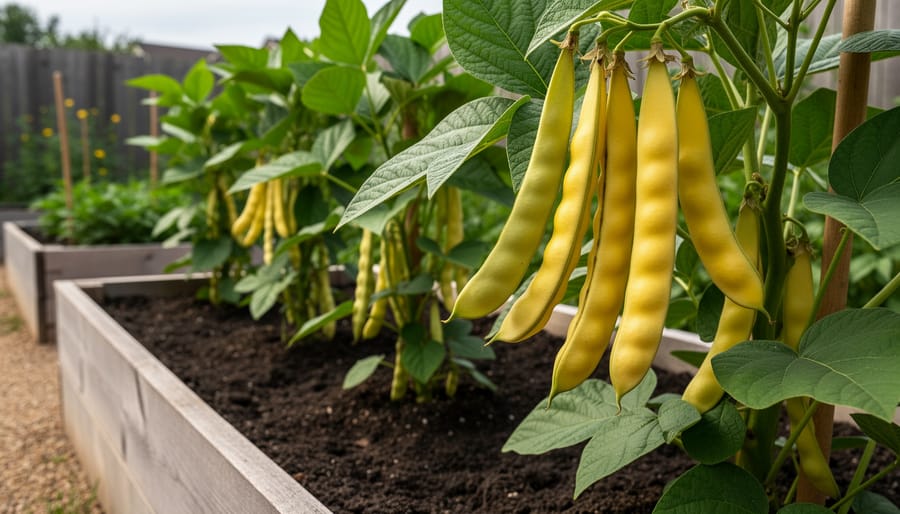
Your bush beans are off to a great start when you see sturdy stems standing upright, leaves in a rich, deep green, and plants growing at roughly the same pace across your square. Within 7 to 14 days after planting, you should spot the first shoots breaking through the soil. By week three, your beans will develop their characteristic trifoliate leaves and begin to fill out their allotted space.
Around 50 to 65 days from planting, you’ll notice small pods forming along the stems. Beans are ready to pick when the pods are firm, crisp, and about the thickness of a pencil, roughly 4 to 6 inches long for most varieties. The seeds inside should still feel small; if you can see bulges, you’ve waited a bit too long (though they’re still edible, just starchier).
If your square looks overcrowded, leaves overlapping heavily, weak stems, or yellowing lower foliage, don’t hesitate to thin. If you started with 16 plants per square and they’re struggling for light and air, pull a few to bring the count down to 9. It feels counterintuitive, but fewer, healthier plants often yield more than a cramped square of stressed ones.
I keep a simple garden journal, just a notebook by the back door, to track what I planted, which spacing I used, and how the harvest went. It’s become one of my favorite parts of tending my kitchen garden. Jot down your observations this season, and you’ll have a personalized spacing strategy ready for next year.
Common Questions About Bush Beans and Square Foot Gardening
Can I really fit 16 bush bean plants in one square foot?
Yes, you can. Some sources, including official square foot gardening resources, recommend 16 plants per square for bush beans, while others suggest 9. The higher density works well with compact varieties and diligent maintenance, but you’ll need to monitor for crowding and ensure good airflow to prevent disease.
What’s the difference between bush beans and pole beans for square foot gardening?
Bush beans are compact plants that grow 12 to 24 inches tall and work perfectly in the square foot grid without support. Pole beans, on the other hand, are climbing vines that need vertical structures like trellises or poles and require different spacing, typically one plant per square foot rather than 9 or 16.
Can I succession plant in the same square?
Absolutely. Once you’ve harvested your first crop of bush beans, you can replant the same square with fresh seeds. Many gardeners plant new squares every two to three weeks from spring through mid-summer to keep beans coming in all season long.
How long is the growing season for bush beans?
Most bush bean varieties mature in 50 to 65 days from planting to harvest. The overall growing season varies by region, many areas have 4 to 6 months of suitable conditions, so you can often fit multiple succession plantings into a single season if you start after your last frost date.
I’ve found that these questions come up in nearly every conversation about bush beans and square foot gardening. The spacing question is especially persistent because both methods have genuine support in the gardening community. When someone asks if 16 plants will really fit, they’re usually worried about overcrowding, and that’s a valid concern. The answer is that it can work, but it requires attention.
The pole-versus-bush question matters because mixing them up will wreck your grid plan. I’ve seen gardeners accidentally buy pole beans thinking they were bush types, then wonder why their neat square foot setup turned into a tangled mess. Bush beans stay put and behave themselves in the grid.
Succession planting confuses some folks at first. They think once a square is planted, it’s done for the season. But beans are fast growers, and you can harvest, clear, and replant the same square multiple times if your season allows. That’s one of the best parts of square foot gardening with bush beans, you get fresh beans for months instead of one big harvest all at once.
So here’s what I’ve learned from years of square foot gardening: there’s no magic formula for bush bean spacing. The 9-per-square approach gives your plants breathing room and can mean bigger pods. The 16-per-square method maximizes your yield in tight spaces. Both work beautifully when you match the spacing to your bean variety, your climate, and what you’re hoping to harvest.
I’ve tried both methods in my own raised beds, and honestly? My favorite part is comparing the results season after season. One year the denser planting surprised me with abundance; another summer the wider spacing produced healthier plants during a humid stretch. Your garden is different from mine, and that’s exactly the point.
This season, pick the spacing that makes sense for your setup and give it a real shot. Keep notes on what you planted, when, and how it performed. Then come back and tell us how it went. Did you squeeze 16 plants into a square and pull off a bumper crop? Did you space 9 plants and love the airflow? Did you try both in different squares and notice a clear winner for your conditions?
The best gardening advice comes from gardeners who’ve actually tested ideas in their own soil. Share your experiments, ask questions, swap stories. That’s how we all get better at this.
Happy planting, and here’s to a season full of fresh beans.