
International gardening is the practice of borrowing ideas, plants, and techniques from gardening cultures around the world and adapting them to the patch of soil you actually have. You don’t need a Japanese temple or an English estate to do it. A few well-chosen moves, like raking a gravel corner, building a keyhole bed, or growing a cottage-style border, can change how your garden looks and works in a single season.
Every tradition exists because gardeners solved a local problem. Mediterranean courtyards use gravel and terracotta to cope with drought. Japanese gardens turn a small space into a calm scene through restraint and careful pruning. African keyhole beds stretch scarce water and compost across a tiny footprint. The trick is to borrow the principle, not copy the plant list, so it suits your climate and your budget.
I learned this the hard way after trying to recreate a lush tropical border in a garden that frosts every winter. The ferns didn’t last, but the layering and bold foliage ideas did, using hardy plants instead.
In this guide, we’ll tour global gardening styles, pull out techniques you can realistically use at home, and talk honestly about climate limits and plant import rules. Along the way, I’d love to hear what’s growing in your corner of the world, so share your own finds in the comments.
Why Look Beyond Your Own Backyard?
Every gardener hits the same walls: stubborn clay, thirsty summers, a shady corner where nothing thrives. Chances are someone, somewhere, has already solved your exact problem. Gardeners in dry regions have spent centuries perfecting water-saving tricks. Growers in cool, damp climates know how to squeeze a harvest out of short seasons. Looking abroad gives you a bigger toolbox, and that’s useful whether you’re planting your very first pot of basil or your fortieth season of tomatoes.
For beginners, this can sound intimidating, but it really isn’t. You don’t need a passport, a greenhouse full of rare orchids, or a big budget. What you borrow is the idea, not the plant. Learn why a Japanese gardener leaves open space, or why a Mediterranean grower tucks gravel around the roots, and you can use that logic with whatever’s growing in your own yard. If you’re just starting out and want a few easy ways to transform your outdoor space, global ideas make a great spark of inspiration.
Experienced growers benefit too. After years in the same garden, it’s easy to settle into habits. A fresh perspective can shake things up, suggest a plant combination you’d never have tried, or finally crack a problem you’ve been working around for ages.
And honestly, it’s just plain fun. Gardeners are a generous bunch, and swapping stories, photos, and tips with people across the world turns a quiet hobby into a conversation. The principle travels well, even when the plants don’t.
Garden Traditions From Around the World
Japanese Gardens: The Art of Restraint
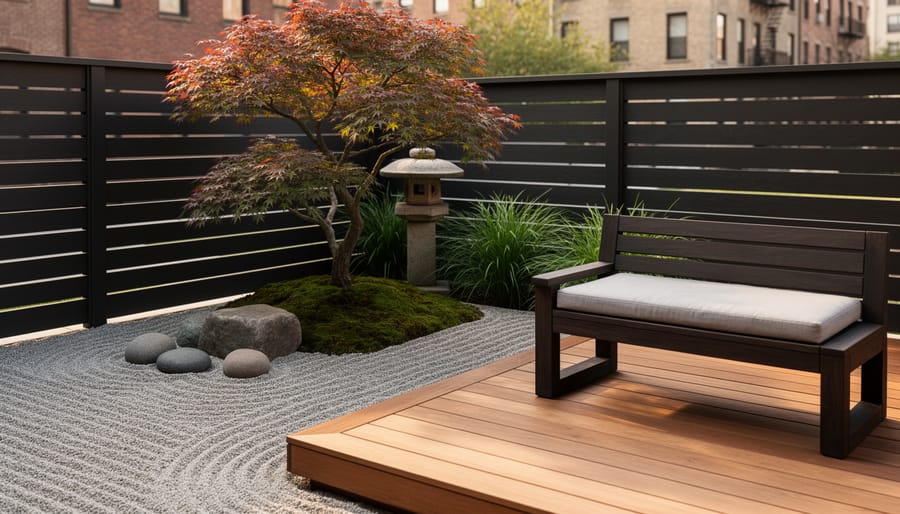
Japanese gardens taught me that what you leave out matters as much as what you put in. The whole style rests on a few ideas: balance, simplicity, and respect for empty space. Instead of filling every inch, designers treat open gravel or bare ground as part of the picture, giving your eye somewhere to rest.
A few materials do most of the work. Moss softens stone and thrives in shade where grass sulks. Rocks act like the bones of the garden, set in odd-numbered groups so they look natural rather than lined up. Pruning is slow and deliberate, shaping pines and maples to show their branch structure instead of chopping them into balls.
A few years ago I turned a gloomy corner of my own patio into a tiny version of this. One shallow bowl of water, three mossy stones, a single potted maple, and a rake-patterned bed of pea gravel. That’s it. I’ll admit it felt strange to stop adding things, since I’m the sort of gardener who normally tucks a plant into every gap. I even resisted my usual urge to sneak in a few garden gnomes which have their place elsewhere in my yard but would have broken the calm here.
Now I sit there with my morning coffee, and it feels twice its size. Even a patio you can cross in four steps can hold that kind of quiet.
Mediterranean and Dry-Climate Wisdom
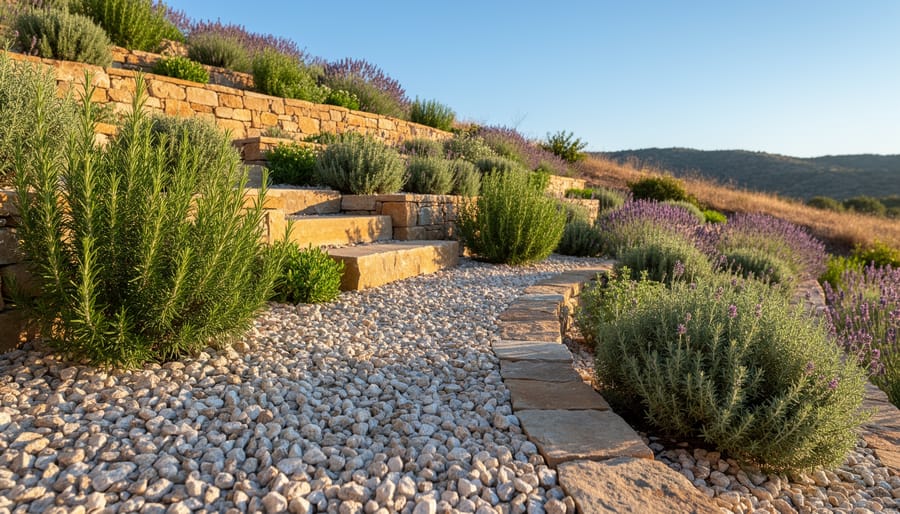
If you’ve ever watched a Greek or Italian gardener tend a hillside plot in July, you’ll notice something: they work with the heat instead of fighting it. Herbs like rosemary, thyme, oregano, and lavender evolved in thin, rocky soil with little rain, so they actually taste and smell better when they’re a bit stressed. Olive trees do the same, sending roots deep to find moisture that shallow-rooted plants never reach.
Their toolkit is simple. Gravel mulch keeps soil cooler, slows evaporation, and keeps the crowns of silvery plants dry, which prevents rot. Terracing, those stepped walls you see on Mediterranean slopes, slows runoff so rain soaks in rather than racing downhill. Even a low row of stones across a sloped bed does a smaller version of the same job.
Watering is where most of us go wrong. Mediterranean gardeners water deeply and rarely, which pushes roots down. A good soak once a week beats a daily sprinkle that keeps roots lazy near the surface. Water early in the morning or at dusk, aiming at the soil rather than the leaves.
If you’re facing hot summers or restrictions, try these:
– Swap thirsty annuals for lavender, sage, or santolina.
– Top beds with an inch or two of gravel or coarse mulch.
– Group plants by water need so you’re not overwatering the tough ones.
– Collect rainwater in a barrel for dry spells.
English Cottage Gardens: Joyful Chaos
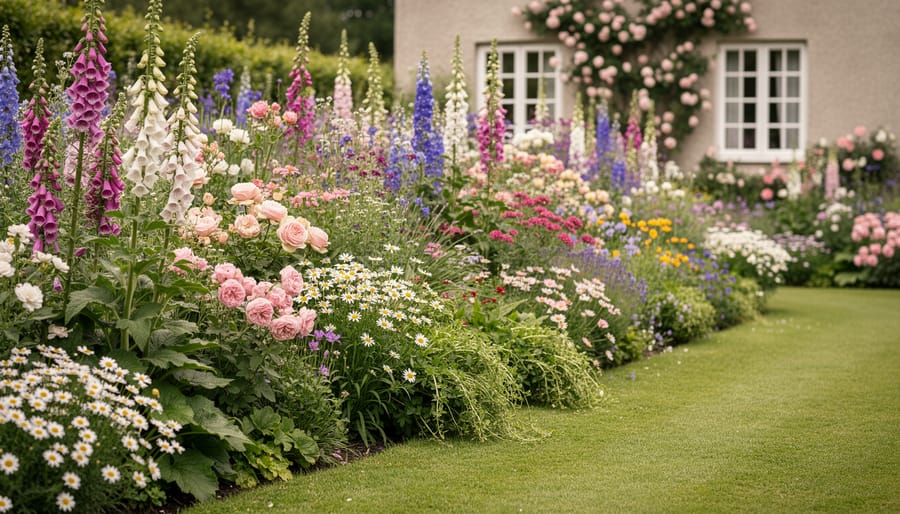
The English cottage garden is what happens when practicality and prettiness refuse to stay in separate beds. Roses climb beside runner beans, lavender spills over a path, and a row of lettuce sits happily next to foxgloves. Nothing is lined up with a ruler, and that’s the whole charm.
This style is wonderfully forgiving for beginners. Dense planting leaves little bare soil for weeds, and if a plant fails, its neighbors quickly fill the gap. Self-seeding flowers like calendula and nigella keep showing up uninvited, which feels less like work and more like a gift.
You can get the look in a surprisingly small space. Start with one or two sturdy anchors, such as a climbing rose on a trellis or a tall delphinium. Then tuck in herbs like thyme and chives along the edges, with a few vegetables mixed among the flowers rather than banished to a separate plot. Pack plants closer than the label suggests, and let a few stray into the path.
If you’re trimming back turf to make room, a little small lawn care goes a long way, since a compact patch of grass can frame your borders nicely. I once replaced half my lawn with a cottage border, and the bees showed up within a week.
Tropical and Food-Forest Approaches
In tropical regions, gardeners have long grown food the way a forest grows itself: in layers. Instead of planting everything in neat, separate rows, they stack plants at different heights so each one gets what it needs. This is the idea behind a food forest, and it works far beyond the tropics.
Here’s how the layers break down. The canopy is the top level, made of tall trees like mango, coconut, or, in cooler places, apple and pear. Below that sits the understory, where smaller trees and big shrubs live, such as papaya, citrus, or currants. Next comes the herb and ground-cover layer: lower plants like mint, strawberries, and comfrey that carpet the soil. Then you’ve got roots below the surface (think ginger, potatoes, or garlic) and climbers that scramble up everything, like beans and passionfruit.
Why bother? Layers shade the soil, which means less watering and fewer weeds. Fallen leaves feed the ground, so you fertilize less. And a mix of plants tends to confuse pests, so you spend less time fighting them.
You don’t need acres to try it. When I first copied this idea, I tucked strawberries and chives beneath a single dwarf apple tree in a corner of my yard. It was a tiny experiment, but that little patch looked after itself far better than my rows ever did. Start with one tree and build downward from there.
Borrowing Techniques That Work Anywhere
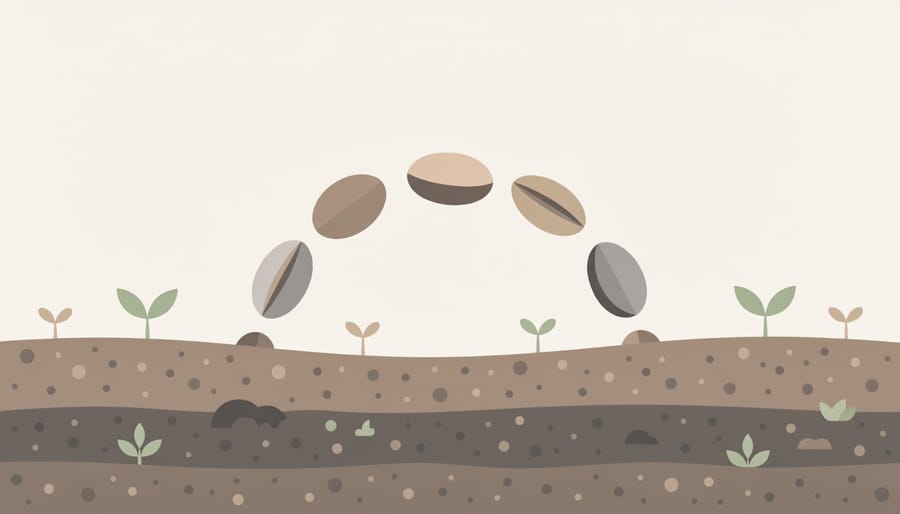
Here’s the thing I wish someone had told me earlier: a technique is just a solution to a problem. Gardeners in dry regions, rainy regions, and cramped cities all solved the same handful of puzzles, and they landed on methods that travel surprisingly well. The trick is asking why it works before you copy how it looks.
Here are a few worth borrowing:
- Raised beds, from European and Asian kitchen gardens, give you better drainage and warmer soil in spring.
- Terracing, used on hillsides from the Andes to southeast Asia, slows runoff so slopes hold water instead of shedding it.
- Companion planting, such as the Native American “three sisters” of corn, beans, and squash, lets plants support each other and use space smartly.
- Rainwater harvesting, common across India and the Mediterranean, turns free storm water into a summer lifeline.
- Vertical growing, perfected in crowded Asian cities, multiplies your planting space without adding ground.
- Gravel and organic mulches, a dry-climate staple, keep roots cool and moisture in the soil.
Notice that each one is really about a principle: saving water, building better soil, or squeezing more out of limited space. That’s the part that transfers to your garden, whether you’re in a damp climate or a desert.
Take terracing. You probably don’t have a mountainside, but you might have a small slope where water races off after every rain. A couple of low retaining walls, even made from salvaged stone or timber, can turn that slope into level planting steps that actually soak up water. Same principle, much smaller scale.
Raised beds are another good example. In a wet climate, they help soil drain. In a hot, dry one, you can fill them with moisture-holding compost and keep them shaded or mulched. Same structure, completely different tuning. This is where blind copying goes wrong: a technique built for monsoon rains can backfire in a drought if you don’t adjust it.
Soil building deserves a mention too. Gardeners everywhere, from Japanese farmers to British allotment holders, treat soil as something to feed rather than just use. Adding compost, leaf mold, or other organic matter each season pays off in nearly every climate. If you’re prepping beds or spreading mulch and compost, a solid tool makes the job far easier, and you can compare the best gardening rakes to find one that suits your soil and garden size.
My advice is to start small. Pick one technique, try it on a single bed or corner, and watch what happens before you commit the whole garden. Then adjust it to your own sun, soil, and rainfall. That’s exactly how those methods spread around the world in the first place.
Have you borrowed a technique from another culture that surprised you? Tell us about it in the comments, because the best ideas often come from fellow gardeners.
Growing Plants From Other Climates: Reality Check
We all fall for it at some point: that gorgeous plant from a faraway garden that looks like it would be perfect on your patio. The good news is that you can grow more than you’d think. The honest news is that you need to know your limits first.
Start with hardiness zones, which are simply a way of sorting regions by how cold they get in winter. Every plant has a lowest temperature it can handle, and your zone tells you whether it will make it through your coldest nights. Checking hardiness zones and winter lows for your area takes about two minutes and can save you a lot of heartache.
Then there are microclimates, the small pockets in your own yard that run warmer or colder than the rest. A south-facing brick wall soaks up heat all day and releases it overnight, so that spot might act like a zone warmer. A low corner where cold air settles can be a zone colder. Walk your garden on a chilly morning and notice where the frost lingers.
If a plant is borderline, you have options:
– Containers: Pots can move to a sheltered spot or indoors when temperatures drop.
– Overwintering: Cool, bright rooms, garages, or unheated porches keep tender plants alive until spring.
– Local lookalikes: Many regions have native or hardy plants with a similar shape, color, or texture to an exotic favorite, without the fuss.
I learned this the hard way with a potted olive tree I bought after falling in love with Mediterranean gardens. I left it outside through a hard freeze, convinced it would be fine. By spring, it was a stick in a pot. What stung wasn’t the money, it was realizing I’d skipped the simple homework of checking what it could actually tolerate. These days I ask “what does this plant need?” before “how does it look?”
So dream big, but match your dreams to your conditions. Have you ever lost a plant you were sure you could keep alive? Tell us about it in the comments.
Connecting With Gardeners Worldwide
The good news is you don’t need a passport to garden alongside people on the other side of the world. Some of my favorite growing tips have come from strangers I’ve never met in person, and finding your own circle is easier than you might think.
Start with online forums and social media groups. Look for communities built around a specific style or region, like Mediterranean herb growing or Japanese-inspired small spaces. Post a photo of what you’re growing, ask a real question, and you’ll be surprised how generously people answer. If you enjoy the idea of learning together, it’s worth reading about how social gardening builds connections that go well beyond a screen.
Closer to home, check for botanical societies, cultural gardens, and garden clubs. Many cities have a Japanese garden or a heritage plot tended by volunteers who love explaining their traditions. Garden tours, whether local open-garden days or organized trips abroad, are another great way to see techniques in action.
Seed swaps are a favorite of mine, but they come with a few ground rules worth knowing before you mail anything across a border.
Is it safe to swap seeds internationally?
It can be, but many countries restrict importing seeds and plant material to protect local ecosystems. Check your national agriculture or plant health authority’s rules before sending or receiving anything, and stick to local swaps if you’re unsure.
How do I find gardeners in other countries?
Join online gardening forums and social media groups focused on a particular plant, style, or region. Sharing your own photos and asking specific questions is the quickest way to start real conversations.
Do I need to travel to learn global techniques?
Not at all. Books, videos, cultural gardens, and online communities let you learn the principles behind other traditions, and you can adapt them to your own climate right at home.
And of course, the Plant Geek community is a wonderful place to begin. Share what you’ve picked up from another culture’s garden, big or small. I’d love to hear it, and so would your fellow growers.
Conclusion
So here’s my challenge to you: pick one idea from this tour and try it this season. Just one. Maybe that’s a gravel mulch around your thirstiest herbs, a few layers of planting under a small tree, or a quiet little corner with a stone, some moss, and nothing else. It doesn’t need to be big, and it certainly doesn’t need to be perfect.
What I’ve learned from gardeners across the world is that the best ideas rarely depend on fancy plants or a faraway climate. They depend on understanding the principle behind the practice, whether that’s saving water, building soil, or making the most of a tiny space, and then adapting it to the dirt under your own feet. Some attempts will thrive, and others will teach you something just as valuable.
At its heart, gardening is about curiosity and sharing. Every gardener you meet, near or far, is holding a trick you haven’t tried yet.
Now it’s your turn. Have you borrowed a technique from another country, grown a plant with an interesting story, or swapped seeds with someone across the ocean? Tell us in the comments. I’d love to hear what you’ve discovered, and I bet other Plant Geek readers will too.