
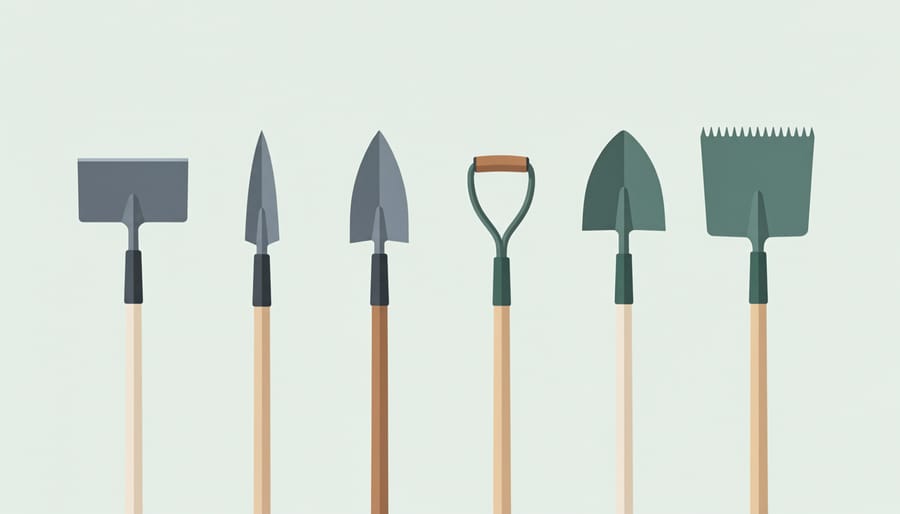
Choosing the right hoe comes down to three essentials: blade type for your task, handle length for your height, and material quality that won’t snap mid-season. If you’re weeding tight rows, a scuffle hoe slides beneath soil surface without disturbing roots. For shaping beds or hilling potatoes, a draw hoe with its angled blade moves soil quickly. Hand plows cut furrows for seed planting, while warren hoes tackle both trenching and precision weeding with their pointed, triangular heads.
I learned this the hard way after snapping two cheap hoes in one spring, both at the handle connection point. The difference between a $15 bargain-bin tool and a well-constructed hoe with a forged steel head and hardwood handle is about three seasons of reliable use. That investment pays off when you’re working a 20-by-30-foot vegetable plot every weekend.
The challenge most gardeners face isn’t finding a hoe, it’s avoiding the wrong one. Big-box stores stock dozens of variations, but blade shape matters more than brand recognition. A heavy-duty draw hoe feels powerful until you’re hunched over for an hour trying to weed lettuce seedlings, and that delicate stirrup hoe works beautifully on annual weeds but bounces off established crabgrass roots.
What you really need is clarity on which hoe type matches your soil, your crops, and your back. This guide walks through the key factors that separate a tool you’ll reach for weekly from one that collects dust in the shed. We’ll compare the four main hoe categories, break down handle and material considerations, and help you match the right tool to your actual gardening tasks, not just what looks professional hanging on the wall.
What Every Gardener Should Know Before Buying a Hoe
Picking the right hoe isn’t about grabbing the cheapest option or the one that looks sturdiest. It’s about matching four key factors to how you actually garden, and getting these decisions right from the start will save you from buying twice or battling with a tool that fights you instead of helping.
First, consider blade shape and size. The hoe’s head determines what it excels at, some shapes chop through established weeds with power, while others slice delicately between young plants without disturbing roots. The size of the blade affects how much ground you can cover in each stroke and whether you’ll tire quickly in larger beds or appreciate the precision in tight spaces.
Handle length matters more than most gardeners realize until they’ve spent an hour bent over a too-short tool. You need a shaft length that lets you work upright without hunching, typically determined by your own height. Grip style also plays a role: D-grip handles like those on quality tool sets offer excellent control and reduce hand fatigue during longer projects, while straight handles provide different leverage depending on the task.
Materials affect both durability and how the tool performs season after season. Hardwood handles offer proven durability and a comfortable feel, while the hoe head material, whether forged steel or stainless, determines how well it holds an edge and resists rust. Higher-quality construction costs more upfront but rewards you with years of reliable service.
Finally, think about your intended use. Are you tackling sprawling vegetable beds, maintaining flower borders, or primarily fighting weeds in pathways? Your main gardening tasks should drive every other decision, because a hoe perfectly suited to one job might frustrate you in another.
Garden Hoe Types Compared: Finding Your Perfect Match
Draw Hoes: The Traditional Workhorse
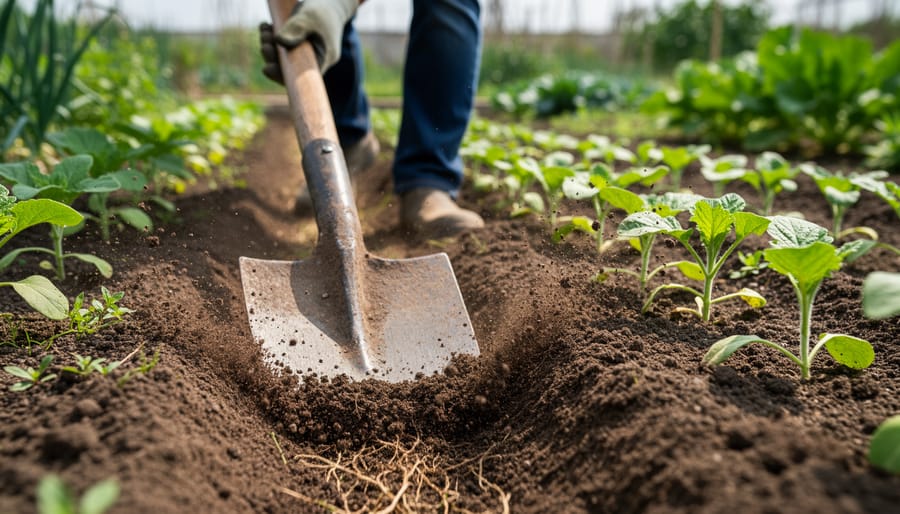
The draw hoe is the classic garden workhorse you’ve probably seen leaning against shed walls for generations. Its flat, rectangular blade sits at a near-right angle to the handle, letting you swing it downward in a chopping motion that cuts through weed roots and breaks up compacted soil with satisfying efficiency. I learned to appreciate this design when clearing a neglected bed last spring, three seasons of quackgrass didn’t stand a chance against that straight edge biting into the ground.
This is your go-to hoe for shaping soil around established plants, mounding earth for potatoes, or carving out furrows for seed rows. The weight of the blade does most of the work as you pull it toward you, making it less tiring than you’d expect for heavy-duty tasks. Choose a draw hoe when you need power over finesse, clearing new ground, dealing with stubborn weeds that have set deep roots, or preparing beds where precision between plants isn’t the priority. It’s not the lightest option for daily weeding, but nothing handles tough jobs better.
Warren Hoes: Precision for Tight Spaces
Warren hoes stand out with their distinctive triangular or heart-shaped blades that taper to a point, making them the precision tool in your gardening arsenal. That pointed tip excels at tasks where a standard rectangular blade would be too clumsy, think weeding tight rows of carrots or creating narrow seed trenches without disturbing neighboring plants. I learned to appreciate mine when establishing herb beds; the pointed design let me work right up to the basil stems without nicking them or compacting the soil around their roots.
The shape matters because it concentrates your force into a smaller area, giving you control in confined spaces. You can slip the point between closely-spaced plants, scrape along border edges, or cut a precise V-shaped furrow for planting. Where a draw hoe might take out a seedling along with the weed, a Warren hoe lets you target just what needs removing. It’s not the best choice for clearing large open areas, the smaller blade means more passes, but for intensive planting beds and detailed garden work, that triangular profile becomes indispensable.
Scuffle Hoes (Dutch Hoes): Effortless Weeding
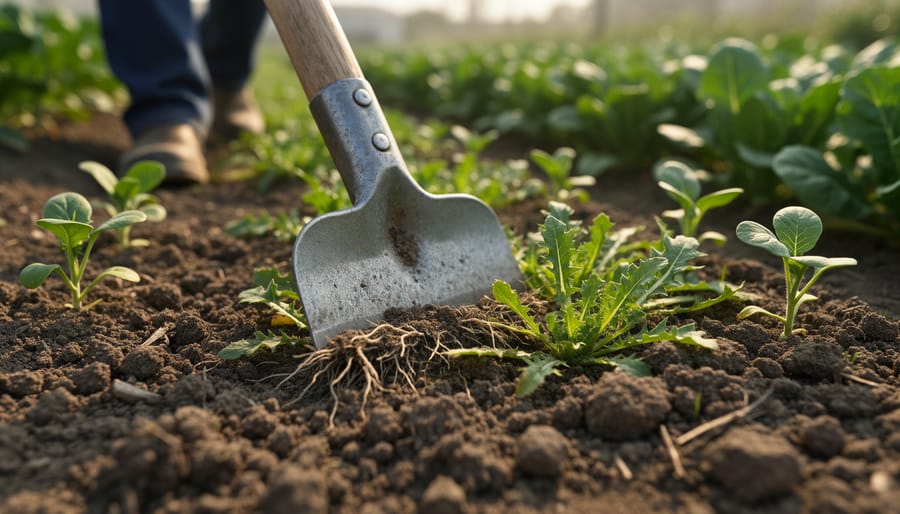
If you’ve ever spent a morning hunched over your garden, chopping at weeds only to see them pop back up days later, a scuffle hoe will change your routine. Also called a Dutch hoe or stirrup hoe because of its loop-shaped blade, this design works with an entirely different motion than the traditional chop-and-pull.
You push the hoe forward along the soil surface, then pull it back, and the blade slices through weed roots just beneath the ground. This back-and-forth glide feels almost effortless compared to the jarring impact of a draw hoe, and it’s remarkably effective at cutting young weeds before they establish deep roots. The beauty of the scuffle hoe is that it disturbs very little soil, so you won’t accidentally uproot your vegetables or bring buried weed seeds to the surface where they can germinate.
The blade stays parallel to the ground, skimming along about half an inch down, which makes it ideal for maintaining paths, working around established plants, and keeping beds weed-free between harvests. Some models come with serrated or toothed edges that grip persistent weeds better, giving you extra cutting power without changing your technique. If your main challenge is staying ahead of weeds rather than heavy soil work, a scuffle hoe becomes the tool you reach for most often.
Hand Plows and Specialty Designs
Hand plows feature a narrow, pointed blade mounted at an angle, making them excellent for creating precise planting furrows in vegetable gardens. They dig deeper than most hoes while maintaining control, which is ideal when you’re sowing seeds in rows or planting bulbs at consistent depths. Beyond hand plows, specialty hoe designs address specific challenges: collinear hoes with their ultra-thin blades excel at delicate weeding around seedlings, while heart-shaped hoes navigate curved bed edges beautifully. If you garden in containers or raised beds with limited space, consider miniature versions with shorter handles, around 30 inches, that give you precision without the awkward leverage of full-size tools in tight quarters.
Handle Comfort and Materials: Why It Makes or Breaks Your Experience
The handle of your garden hoe matters far more than most gardeners realize until they’ve spent an hour weeding in the summer heat. I learned this the hard way during my first season when I bought a hoe based entirely on blade quality, only to develop blisters and shoulder strain after thirty minutes of use. The right handle transforms hoeing from a dreaded chore into a task you can comfortably maintain throughout the growing season.
Handle Length: Getting It Right for Your Height
Shaft length directly affects your posture and how much you bend while working. A handle that’s too short forces you to hunch over, leading to back pain and fatigue within minutes. Too long, and you lose control and leverage. The general rule is that when you stand the hoe upright beside you, the handle should reach somewhere between your ear and the top of your shoulder. Taller gardeners need handles in the 60-inch range, while those of average height work best with 54 to 58 inches.
Grip Styles: D-Grip vs. Straight
The grip style changes how force transfers from your hands to the blade. D-grip handles, like those on the Ames Smaller Spaces Garden Tool Set, provide a secure hold that reduces hand fatigue during longer projects and gives you better control when working in tight spaces. Your hand naturally wraps around the D-shape, preventing the tool from twisting. Straight handles offer more flexibility in hand positioning, which some experienced gardeners prefer for varied tasks and different hoeing angles.
Material Choices and What They Mean
- Hardwood (ash, hickory): Traditional choice offering excellent durability and shock absorption; heavier but feels solid and balanced
- Fiberglass: Lightweight and weather-resistant; won’t splinter but can feel less natural in the hand and may lack the flex that absorbs impact
- Composite materials: Increasingly common in mid-range tools; combine light weight with strength but vary widely in quality
Hardwood handles remain popular because they offer the durability serious gardeners need while providing natural flex that reduces the jarring impact on your hands and wrists with each stroke. The wood also warms to your grip, becoming more comfortable as you work. Fiberglass handles excel in damp conditions since they won’t rot or swell, making them ideal if you store tools outdoors or garden in wet climates.
Weight distribution between the handle and head affects how the tool feels in motion. A well-balanced hoe with a quality handle lets you work with smooth, controlled strokes rather than fighting the tool’s momentum.
Material Quality: What to Look for in Blade and Construction
A hoe’s blade material and construction quality directly determine how long it will serve you and how well it performs season after season. Understanding what separates a dependable tool from one that will frustrate you saves both money and effort in the long run.
Stainless steel blades resist rust beautifully and require minimal maintenance, making them ideal if you garden in damp conditions or sometimes leave tools outside overnight. They stay sharp longer than carbon steel and clean easily after working in clay or sticky soil. The tradeoff is cost, expect to pay more upfront, though many gardeners find the durability worth it. Forged steel blades, on the other hand, offer exceptional strength and can take serious punishment when you’re breaking up compacted ground or chopping through stubborn roots. These require more care to prevent rust but often outlast stamped alternatives by years.
The construction method matters as much as the material itself. Forged hoe heads, where the metal is heated and hammered into shape, create a denser, stronger blade than stamped versions cut from sheet metal. Look for a smooth, secure connection between the blade and socket, any gaps or rough welds signal corners cut during manufacturing. Japanese tool quality demonstrates how precision forging and attention to detail create implements that last decades rather than seasons.
Weight distribution tells you a lot too. A well-balanced hoe feels controlled in your hands, not blade-heavy or awkwardly light. Budget options under thirty dollars often use thinner metal and cheaper joining methods, while mid-range hoes around fifty to eighty dollars typically feature better steel and solid construction that stands up to regular use without bending or loosening.
Recommendations for Different Gardening Scenarios
For a small space garden or container gardening setup, a hand-sized Warren hoe gives you the precision you need without the bulk. The triangular blade slips easily between pots and raised bed edges, letting you tackle weeds in tight quarters where a full-length tool would feel clumsy. If you’re working a balcony or patio garden, pair it with a compact scuffle hoe for quick maintenance passes.
Large vegetable patches demand a different approach. A long-handled scuffle hoe becomes your best friend here, covering ground efficiently with its push-pull motion while you stay upright. For breaking new ground or shaping rows, add a draw hoe with a blade wide enough to move serious soil. The combination handles both prep work and ongoing weed control without wearing you out.
If weed control is your main battle, invest in a quality Dutch hoe with a sharp edge. The stirrup design cuts weeds just below the surface as you walk backward, and you’ll notice the difference after one session. Look for one with a blade at least four inches wide to cover more ground per pass.
Multi-purpose needs call for a draw hoe with a sturdy build and comfortable handle. This workhorse tackles everything from chopping weeds to creating furrows, making it the go-to choice when storage space or budget limits your collection. Choose one with a hardwood handle and forged steel blade that can handle daily use across different tasks.
For beginners setting up a beginner herb garden or first vegetable patch, buying gardening tools individually lets you learn what works before committing to sets. Start with a mid-sized scuffle hoe for maintenance. As your garden grows, you might consider tool sets like the Ames Smaller Spaces Garden Tool Set, which includes D-grip handles and durable construction, though you’ll still need to add a hoe separately since that particular set focuses on digging tools.
Common Mistakes to Avoid When Choosing a Garden Hoe
I’ve made plenty of tool-buying decisions I regretted later, and hoe purchases are no exception. Here are the most common mistakes gardeners make when choosing their hoe, and how to sidestep them:
Quick mistakes to avoid:
- Buying the cheapest option without checking blade material or handle construction
- Grabbing a standard-length hoe without measuring whether it matches your height
- Choosing based on looks instead of matching blade shape to your actual garden tasks
- Ignoring the tool’s weight, which becomes exhausting during longer weeding sessions
- Purchasing a single hoe type when your garden really needs two different styles
The price-only trap catches many first-time buyers. A $15 hoe with a thin stamped blade will bend or snap after a season of real use, while a mid-range option around $30-40 with forged steel and hardwood handles can last decades. You’re not saving money if you replace the tool every year.
Handle length deserves more attention than it gets. If you’re 5’10” and buy a 54-inch handle designed for someone 5’4″, you’ll spend every weeding session hunched over with an aching back. Stand upright with your arms relaxed at your sides, the handle should reach somewhere between your shoulder and ear when the blade rests on the ground.
Blade shape mismatches waste your money too. A wide draw hoe looks impressive but becomes useless for detail work between tomato plants, while a narrow Warren hoe won’t efficiently clear weeds from open bed areas. Match the blade to your primary task first, whether that’s precision planting rows suited to your USDA gardening zones or general weed control across pathways.
Weight matters more than most people realize until they’ve worked for an hour. A heavy hoe with a thick steel head might feel sturdy in the store, but after thirty minutes of repetitive chopping, that extra pound becomes genuinely fatiguing. Test the weight by holding it extended for twenty seconds, if your arms tire, it’s too heavy for comfort.
Frequently Asked Questions
What’s the difference between a Dutch hoe and a draw hoe?
A draw hoe has a rectangular blade that you pull toward you in a chopping motion, making it ideal for breaking up soil and removing established weeds. A Dutch hoe (also called a scuffle hoe) has a stirrup-shaped blade that slides just below the soil surface with a push-pull motion, perfect for quick surface weeding without disturbing roots or soil structure.
What handle length do I need for my garden hoe?
Your ideal handle length depends on your height and how you garden. Most people find a handle that reaches somewhere between their shoulder and ear when standing upright works best, allowing you to work without excessive bending. If you’re between 5’4″ and 6′ tall, a standard 54-60 inch handle usually fits well, while taller gardeners often prefer longer shafts.
Is stainless steel worth the extra cost?
Stainless steel blades resist rust and clean easily, which matters if you garden in wet conditions or don’t always wipe your tools down after use. For most gardeners, a quality forged steel blade with proper maintenance performs just as well at a lower price point, but stainless steel offers peace of mind and requires less upkeep over the years.
Can one hoe handle all my garden tasks?
A single draw hoe can tackle many jobs reasonably well, but you’ll find certain tasks much easier with the right specialized design. If you maintain large garden beds, adding a scuffle hoe for quick weeding sessions makes a noticeable difference in how much time you spend on maintenance.
These questions come up constantly in our gardening community discussions, and I’ve found that understanding these basics helps you skip past the trial-and-error phase. The blade shape question matters most because it directly affects what feels natural when you’re actually out there working in the garden. I learned this the hard way after spending a frustrating season fighting with the wrong hoe for my clay soil.
The maintenance question deserves a quick note too: regardless of which hoe you choose, a simple wipe-down after use and occasional sharpening of the blade edge keeps any quality tool performing well for years. Store your hoe in a dry spot, and it’ll be ready whenever you need it.
Choosing the right hoe doesn’t have to be complicated once you know what matters most: your garden’s size, your main tasks, and what feels comfortable in your hands. Think about whether you’ll be tackling weeds between tight rows, shaping beds in a larger plot, or doing a bit of everything. The blade shape, handle length, and material quality all work together to make your time in the garden more productive and enjoyable.
I’ve found that investing in a well-made hoe transforms those repetitive tasks from a chore into something almost meditative. You’ll spend less time fighting your tools and more time enjoying the results.
Now I’d love to hear from you. What type of hoe has become your go-to garden companion, and what makes it work so well for your space? Are you team scuffle hoe for easy weeding, or do you swear by a traditional draw hoe for heavier work? Share your experiences in the comments below. Your insights help fellow gardeners make smarter choices, and I’m always curious to learn what’s working in gardens beyond my own. Happy hoeing, and here’s to seasons of easier, more satisfying gardening ahead.