

You can maintain a beautiful, healthy lawn with just four essential tools: a push mower, a string trimmer, a rake, and a garden hose with a basic sprinkler. This minimal setup costs between $300 and $600 to assemble in 2026, and it’s more than enough for properties up to half an acre.
I’ll be honest with you. When I started caring for my first tiny suburban lawn seven years ago, I felt overwhelmed by the endless aisles of expensive equipment at the hardware store. The guy next door had a riding mower, an edger, an aerator, and what looked like a small tractor in his garage. I thought I needed all of that to get decent results.
Turns out, I was completely wrong. My quarter-acre lawn thrived with the basics, and I learned something valuable: more equipment doesn’t equal better grass. What matters is understanding your lawn’s needs and using simple tools consistently and correctly.
The beauty of a small lawn care setup is that it forces you to develop real skills rather than relying on gadgets. You’ll learn to read your grass, spot problems early, and work with your yard’s natural rhythm. You’ll also save hundreds of dollars and precious garage space.
This approach isn’t about cutting corners or settling for less. It’s about being smart with your resources while achieving professional-looking results. Whether you’re working with a compact city yard or simply don’t want to invest in a fleet of machines, a streamlined setup gives you everything you need to grow thick, green grass that makes you proud every time you pull into the driveway.
The Real Advantage of Starting Small
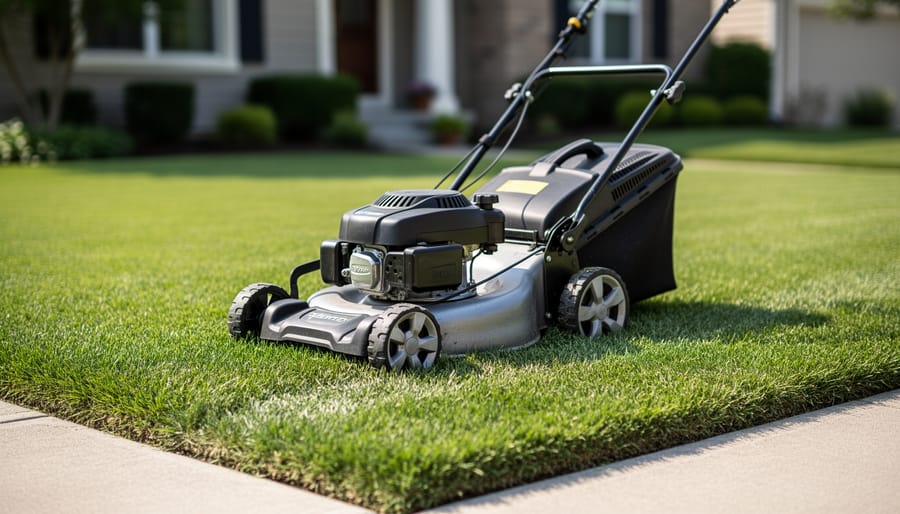
Starting with a small lawn care setup isn’t settling for less, it’s choosing the smarter path. When you’re not drowning in equipment decisions or second-guessing a thousand-dollar investment, you can focus on what actually matters: understanding your grass.
The financial freedom alone changes everything. A basic push mower and a few hand tools might cost you $200 total, compared to the $800-plus you’d drop on a self-propelled mower with all the bells and whistles. If you discover lawn care isn’t your thing, or your needs change, you haven’t mortgaged your weekend hobby budget for the next five years.
But here’s what surprised me most: maneuverability. That compact 16-inch reel mower I started with could slip into corners and around garden beds that would’ve had me doing a twenty-point turn with anything larger. Small equipment teaches you precision because you can actually see what you’re doing and make instant adjustments.
Storage becomes a non-issue too. My entire setup hangs on one garage wall. No dedicated shed needed, no playing Tetris every time I need to park the car, no tools rusting outside because there’s nowhere to put them.
The real advantage, though? You learn the fundamentals without shortcuts masking your mistakes. When you’re hand-edging, you understand edge lines. When you’re pushing a reel mower, you feel exactly how grass height and blade sharpness affect the cut. This hands-on knowledge builds intuition that stays with you even if you eventually upgrade. You’re not just maintaining a lawn, you’re actually learning how lawns work.
Essential Equipment That Actually Earns Its Keep
The Push Mower Decision
I’ll never forget standing in the hardware store, completely paralyzed between two push mowers that looked identical but cost $80 apart. The salesperson kept using terms like “blade contact” and “cutting height adjustment,” and I just wanted something that would cut grass without eating my weekends.
Here’s what actually matters: reel mowers work brilliantly for small, flat lawns under 5,000 square feet with fine grass types like fescue or bluegrass. They’re quiet, need zero fuel, and give that professional scissor-cut that rotary mowers can’t match. But they struggle with uneven terrain, can’t handle tall or thick grass, and require more frequent passes. I learned this the hard way after three weeks of fighting dandelions.
Rotary push mowers handle everything. They power through tall grass, navigate bumps, mulch leaves in fall, and adjust cutting height with a single lever. They’re heavier and need occasional blade sharpening, but they’re forgiving when life gets busy and your grass gets shaggy.
For quality construction, test the handle firmness, check that wheels roll smoothly without wobbling, and lift the mower, cheap ones feel noticeably flimsy. Look for metal decks over plastic, sealed bearings in the wheels, and at least five cutting height positions. A wobbly handle means constant frustration, not savings.
Hand Tools That Multiply Your Efficiency
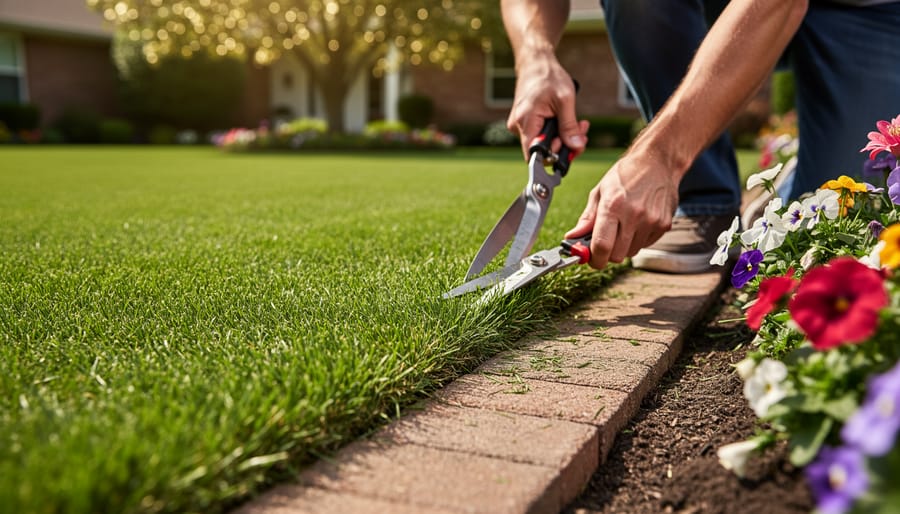
I discovered the magic of hand tools during my second year of lawn care when my ancient edger finally broke. I bought a half-moon edger for twenty dollars, and it changed everything. The precision I gained along walkways and beds made my small lawn look professional.
Three tools deserve prime real estate in your shed. First, quality bypass shears for detail work around obstacles and tight corners where your mower can’t reach. Second, a sharp manual edger that creates clean lines in one pass rather than the ragged edges string trimmers leave. Third, invest in the best rakes 2026 suited to your lawn’s size because they handle everything from debris removal to leveling soil when you add lawn flowers.
The real efficiency comes from sharp blades. Dull tools waste your time and energy. I sharpen my edger and shears twice each season with a simple file, and each job takes half the effort it used to.
The One Power Tool Worth Considering
If you’re adding one power tool to your basic setup, make it a string trimmer. I resisted for two years, thinking I could edge everything with hand shears. That changed one humid July afternoon when I realized I’d spent forty minutes on my knees finishing what a trimmer would handle in five.
String trimmers excel at the tasks that make push mowers and hand tools struggle. They clean up fence lines, navigate around tree bases, and tackle those awkward spots where your driveway meets the grass. For small properties, a lightweight electric model does everything you need without the maintenance headaches of gas engines.
The investment makes sense when you’re spending more than fifteen minutes per mowing session on edge work, or when you notice yourself avoiding certain areas because they’re tedious to maintain. Look for models under eight pounds with adjustable handles. You don’t need commercial power for a quarter-acre lot.
Start with basic trimming technique before attempting edging. Hold the tool at a slight angle, let the line do the work, and move steadily. The learning curve is gentler than you’d expect, and suddenly those perfect borders become achievable without hiring help.
Smart Storage Solutions for Compact Spaces
I learned this lesson the hard way after leaving my brand-new edging shears in the rain overnight, rust spots appeared within days. When you’re working with a small lawn care setup, protecting your investment becomes even more critical because each tool works harder and needs to last longer.
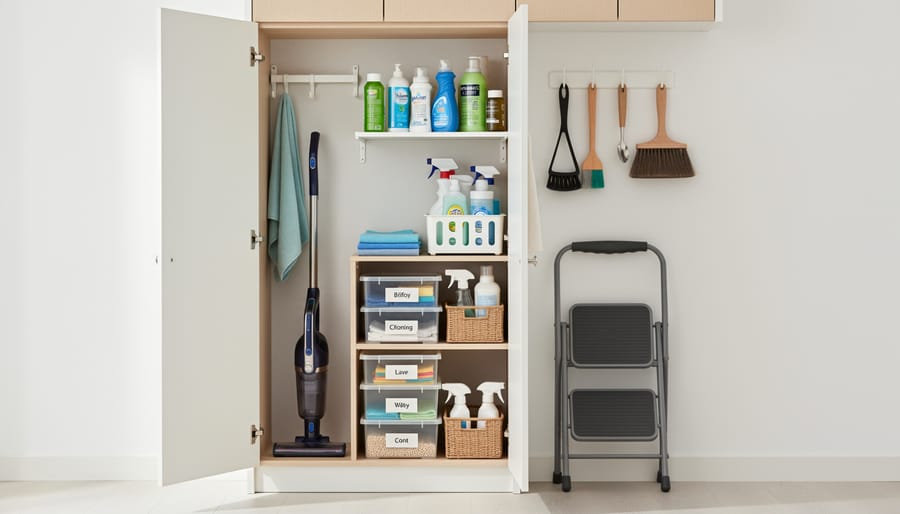
The biggest game-changer for compact storage is going vertical. I mounted a simple pegboard on my garage wall for under thirty dollars, and it transformed my storage situation completely. Hang rakes, shears, and hand tools on individual hooks so they’re visible and accessible. You’ll stop that frustrating hunt for the tool you know you own but can’t find. For push mowers, consider wall-mounted brackets that tip the mower onto its back wheels, freeing up precious floor space.
Outdoor sheds present their own challenges, especially moisture. If your tools live outside, raise them off the floor using pallets or simple lumber risers. Even an inch of clearance prevents ground moisture from creeping up and corroding metal parts. I keep a small bucket of sand mixed with mineral oil in my shed for plunging tools into after each use, it cleans and protects simultaneously, and takes maybe fifteen seconds per tool.
For those without sheds or garage space, weatherproof deck boxes work surprisingly well. Look for models with ventilation holes to prevent condensation buildup. Position the box on level pavers rather than directly on grass or soil. Inside, use foam pipe insulation cut lengthwise to create protective sheaths for sharp edges and blades.
Group tools by function rather than size. Keep your weekly maintenance tools, mower, shears, rake, in the most accessible spot. Store seasonal equipment like aerators or dethatchers higher or deeper, since you’ll only need them periodically. This organization naturally supports how you improve lawn quality through consistent routines rather than reactive scrambling.
One trick nobody tells you: magnetic strips. Mount them to store small metal items like replacement blades, adjustment wrenches, and string trimmer spools. They stay visible, organized, and won’t get lost in a drawer.
Building Your Maintenance Routine
Weekly Tasks That Keep You Ahead
The beauty of a small property is how quickly you’ll move through your weekly checklist. Mowing takes 15-20 minutes tops when you’re working a quarter-acre or less, just enough time to build consistency without turning it into a weekend project. I knock mine out Tuesday evenings after work, and that regularity makes everything else fall into place.
String trimming edges requires maybe five minutes if you stay on top of it. Let grass creep onto walkways for two weeks, though, and you’ll triple that time. Your hand edger comes out every other mowing for crisp definition along beds and sidewalks, another ten minutes well spent. Quick leaf or debris removal with your rake prevents thatch buildup and keeps everything looking intentional rather than neglected.
Check for weeds during each mow and hand-pull the stragglers you spot. Catching them early, while they’re still small, saves hours compared to weekend weed-pulling marathons. This approach mirrors effective lawn care strategy principles, frequent small interventions beat infrequent heroic efforts every time.
Budget thirty minutes total per week, and you’ll find yourself finishing early most times. That extra margin keeps lawn care from feeling like a burden.
Seasonal Deep Work
Most seasonal tasks feel intimidating when you’re working with basic equipment, but I’ve found that simpler tools often force you to work more methodically, which paradoxically leads to better results.
Aerating is entirely manageable with a manual aerator or even a pitchfork if your lawn is under 1,500 square feet. I use a hand-crank aerator that looks medieval but pulls plugs beautifully. Work in a grid pattern after a good rain when the soil gives easily, and don’t stress about covering every square inch. Concentrate on high-traffic areas and compacted spots near walkways. The physical effort becomes meditative once you find your rhythm.
Overseeding follows naturally after aeration. A basic broadcast spreader costs less than dinner out and lasts years. Walk perpendicular passes to ensure even coverage, then rake lightly with a leaf rake to work seeds into the aeration holes. Water consistently for three weeks, this is where the real work happens, not in fancy equipment.
Dethatching with a thatching rake gives you incredible control compared to power units. You can feel when you’re hitting the sweet spot between the grass crown and soil. Work in sections, rest your back, and compost what you pull up.
The secret? These tasks don’t need to happen perfectly or all at once. Split them across weekends if needed. Your lawn doesn’t know whether you used a $3,000 aerator or a $40 manual one.
When to Upgrade (And When Not To)
Knowing when your small setup has truly reached its limits, versus when you’re just tempted by shiny new equipment, saves both money and garage space.
The Clear Upgrade Signals
Property size matters most. If your lawn crosses half an acre and push mowing takes over 90 minutes, a self-propelled or riding mower becomes a time investment rather than an indulgence. I resisted this truth for two seasons after buying a larger home, stubbornly pushing my reel mower until my weekends disappeared into grass cutting.
Physical changes demand honest assessment too. A tweaked back, arthritis, or recovery from injury aren’t weaknesses, they’re realities. If bending to edge or pushing uphill causes genuine pain rather than just effort, power equipment becomes a practical necessity. Your lawn shouldn’t cost you mobility.
Time constraints also shift calculations. When a new job or family responsibilities shrink your available hours, faster equipment might be the only way to maintain standards without abandoning other priorities.
When to Resist the Urge
Convenience isn’t the same as necessity. Wanting to finish ten minutes faster when you currently spend thirty minutes weekly doesn’t justify a $400 purchase. Boredom with your routine or envy of a neighbor’s riding mower aren’t valid reasons either.
If your current setup produces results you’re happy with and fits your schedule, it’s working. Full stop.
The Strategic Middle Ground
Consider renting specialized equipment for annual tasks like dethatching or aerating rather than buying tools you’ll use twice a year. This approach keeps your core setup compact while accessing professional-grade results when needed.
The best upgrade decision asks: “What specific problem am I solving?” If you can’t articulate a clear answer beyond “it would be nice,” you probably don’t need it yet.
Troubleshooting Common Small Setup Challenges
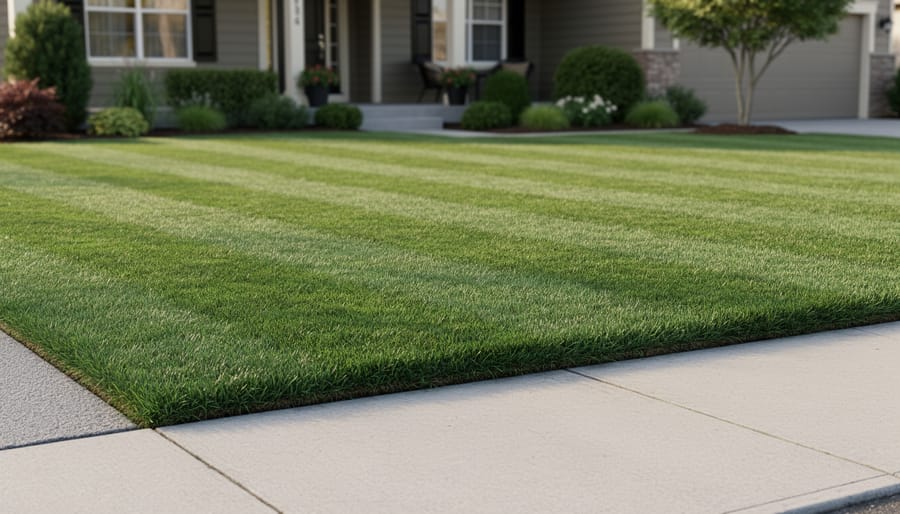
Uneven cutting usually stems from dull blades or improper mowing height rather than equipment limitations. Sharpen your push mower blade every 20-25 hours of use, and always cut when grass is dry. If you notice strips of taller grass, overlap your passes by about three inches and slow your walking pace. For persistent low spots that scalp, raise your cutting height one notch rather than trying to level your entire yard.
Edge finishing challenges the patience of every small setup owner, but hand edging creates cleaner lines than most powered edgers when you develop the technique. Work the edger at a slight angle rather than straight down, and make multiple shallow passes instead of forcing one deep cut. For curved beds, use a half-moon edger and follow a garden hose laid as a guide. The physical effort becomes meditative once you find your rhythm, and you might even start social gardening sessions where neighbors tackle edging together.
What if my push mower can’t handle thick spring growth?
Make two passes at different heights instead of forcing through in one cut. Raise the deck to maximum, mow once, then lower to your desired height for the second pass.
How do I deal with tough weeds without a powered trimmer?
A sharp hori-hori knife or dandelion weeder works better than struggling with dull shears. Attack weeds when soil is moist after rain for easier removal.
Can I really maintain edges without a power edger?
Absolutely. Hand edging takes longer initially but creates sharper, longer-lasting definition. The key is consistency rather than power.
Dealing with thick patches requires strategy over strength. When you encounter an overgrown section, cut it in multiple directions like mowing a crosshatch pattern. The first pass knocks down the tallest growth, the perpendicular second pass catches what the first missed. Never try to bag extremely thick clippings in one attempt; rake them into piles first, then collect with a tarp or wheelbarrow to avoid clogging your mower.
Your small lawn care setup isn’t holding you back, it’s teaching you what really matters. I’ve watched neighbors drop thousands on riding mowers and fancy aerators while their lawns struggle, and I’ve seen budget setups produce turf that turns heads. The difference? Understanding your grass, staying consistent, and using what you have with purpose.
The push mower forces you to notice patterns. Hand tools make you pay attention to edges and problem spots. That attention creates better results than any zero-turn could deliver on autopilot.
Here’s what I’d love to hear from you: What’s your proudest small-setup accomplishment? Maybe you’ve nursed a patchy yard back to health with nothing but a reel mower and determination, or you’ve discovered a storage hack that changed everything. Drop your story in the comments below. This community thrives when we share what actually works in our yards, not what marketing promises.
Your lawn doesn’t need everything. It needs you, showing up regularly with the right techniques. That’s something no amount of equipment can replace.